
Checking a pulse means feeling for a heartbeat to learn about circulation. In first aid, it can give useful information about how the heart is working, but it should not delay urgent action when someone is unresponsive and not breathing normally.
What is a pulse?
The pulse is the movement of blood you can feel in an artery each time the heart beats.
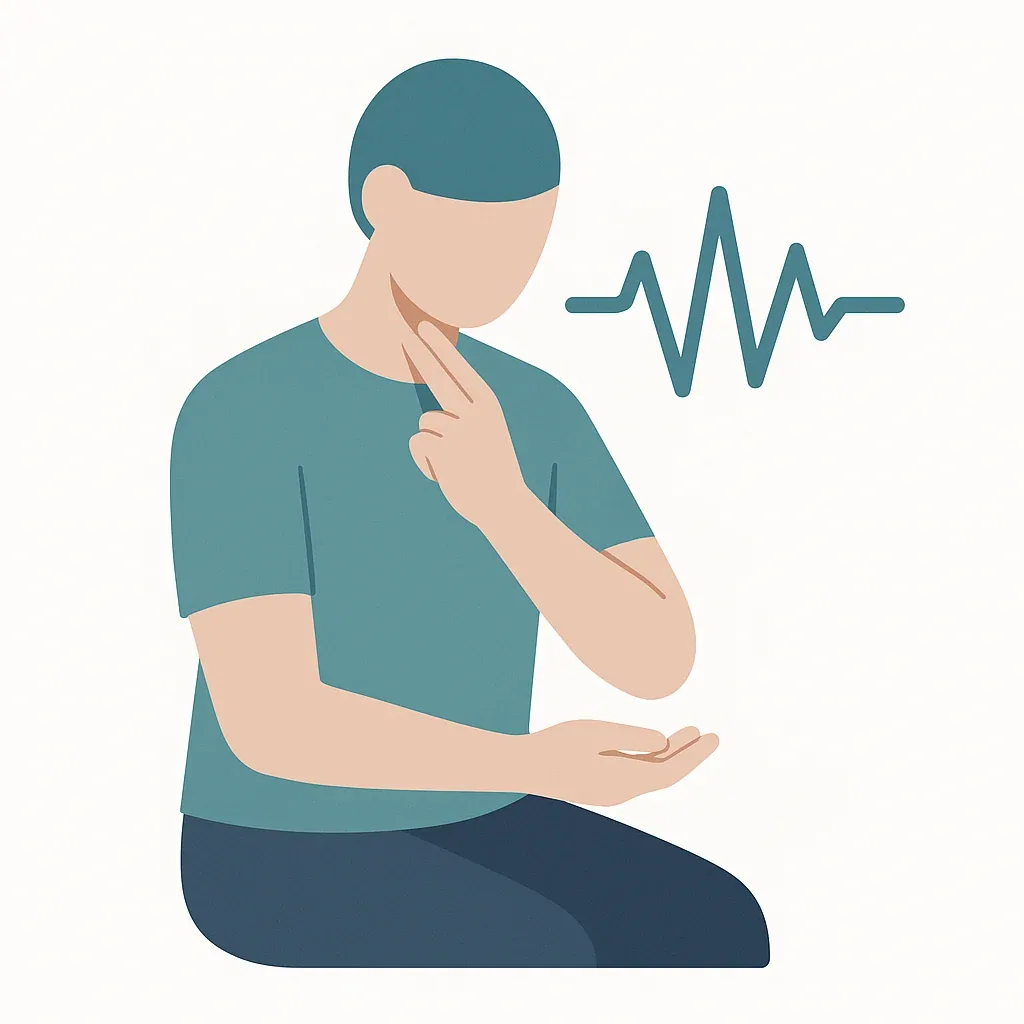
Common places to feel a pulse include:
- the wrist
- the side of the neck
Why might checking a pulse be useful?
A pulse check can help you notice:
- whether circulation seems present
- whether the pulse feels very fast, slow, weak, or irregular
- whether the person’s condition may be changing
It is one part of the broader Vital Signs picture rather than the only thing to rely on.
What can a pulse feel like?
When checking a pulse, you may notice:
- rate: how fast it feels
- rhythm: whether it feels steady or irregular
- strength: whether it feels strong or weak
These signs can change with illness, shock, pain, blood loss, or other emergencies.
Where is the easiest place to check?
The wrist is often the easiest place when the person is awake and stable.
The neck pulse may be easier to feel if the pulse is weak or the person is very unwell. Use gentle pressure and do not spend too long searching if the situation is urgent.
Important first aid limit
For everyday first aid, a pulse check is usually not the first priority in a life-threatening emergency.
If a person is Unresponsive and not breathing normally:
- call
000 - start CPR
- do not delay action by spending too long trying to find a pulse
That practical rule matters more than getting a perfect pulse reading.
When can a pulse check still help?
A pulse check can be more useful when the person:
- is awake but seems unwell
- has abnormal skin signs or possible Shock
- needs repeated observation over time
In these situations, it can support Reassessment and help you describe changes to paramedics.
Quick answer
Checking a pulse means feeling for a heartbeat to learn about circulation. It can be useful in first aid, but it should not delay CPR or other urgent action when a person is unresponsive and not breathing normally.
Sources reviewed
- Healthdirect: first aid basics and DRSABCD
- ANZCOR Guideline 3: Recognition and first aid management of the unconscious person
- ANZCOR Guideline 5: Breathing
Reviewed against Australian first aid and emergency guidance by the First Aid Glossary Editorial Team. This article is general information and does not replace emergency-operator directions, professional medical advice or hands-on first aid training.