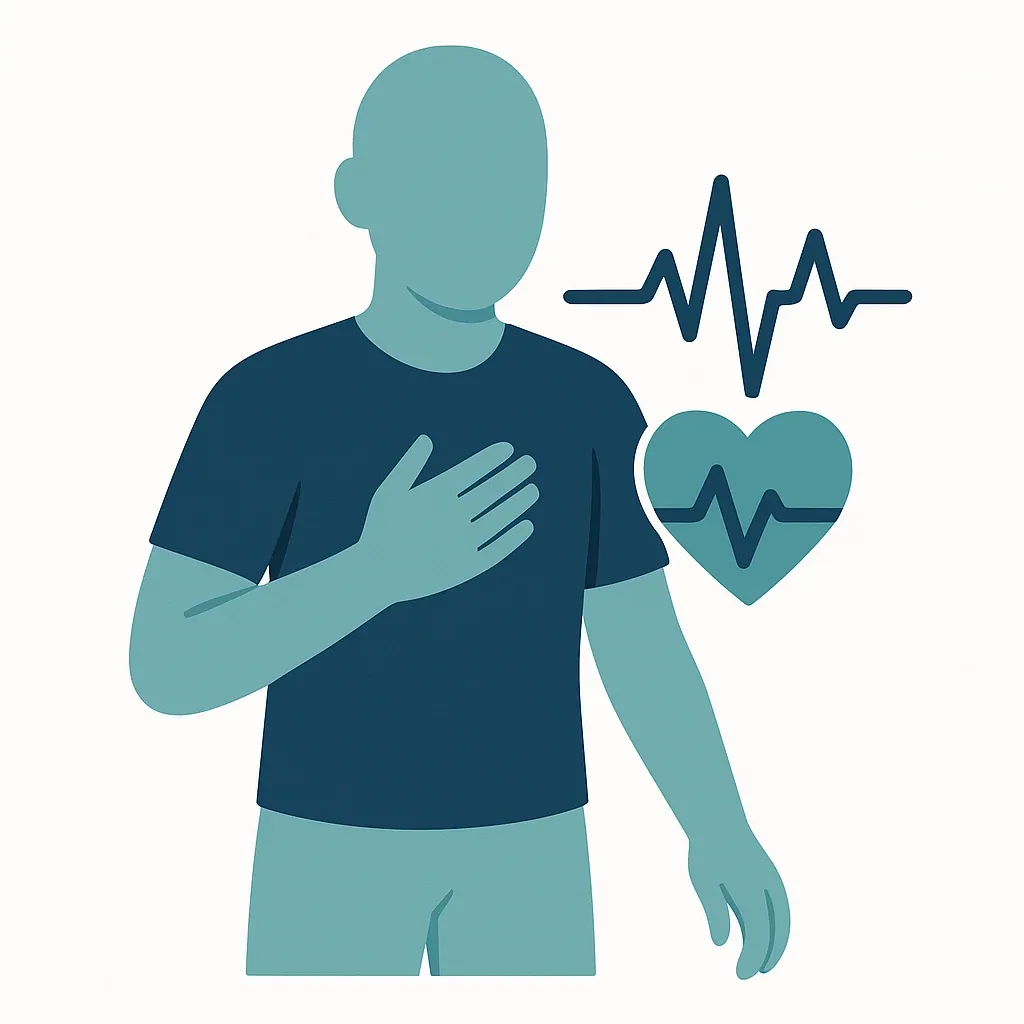

Tachycardia means a heart rate that is faster than normal, usually more than 100 beats per minute in a resting adult. In first aid, it matters because a very fast heart rate can happen with pain, stress, dehydration, bleeding, illness, or a heart-rhythm problem.
What is tachycardia?
Tachycardia is the medical term for a fast heart rate. It does not automatically mean there is a life-threatening emergency, because the heart can beat faster during exercise, fear, or excitement. The concern is whether the person is at rest, looks unwell, or has other worrying symptoms.
Tachycardia is different from Palpitations. Tachycardia is a measured fast heart rate. Palpitations are the feeling that the heart is racing, pounding, fluttering, or skipping beats.
Why it matters in first aid
A fast heart rate can be a clue that the body is under stress. It may happen with:
- fever
- dehydration
- blood loss
- anxiety or panic
- pain
- stimulant use
- heart-rhythm problems
- worsening heart or breathing problems
In first aid, the main question is not just whether the heart rate is fast, but whether the person is otherwise stable.
Common signs that may happen with tachycardia
Someone with tachycardia may also have:
- a racing heartbeat
- dizziness or light-headedness
- weakness
- shortness of breath
- chest pain
- sweating
- fainting or near-fainting
If these symptoms are severe or sudden, urgent medical help may be needed.
How to assess it
You may notice tachycardia when checking Heart Rate or Pulse. A fast pulse is a useful clue, but it should be judged alongside the rest of the person’s condition.
Look at the whole picture:
- Are they alert and talking normally?
- Are they breathing normally?
- Do they have chest pain?
- Have they collapsed or nearly fainted?
- Are they pale, sweaty, or obviously deteriorating?
What to do in first aid
If someone seems to have tachycardia:
- Help them stop exertion and sit or rest.
- Keep them calm.
- Check for chest pain, breathing difficulty, dizziness, or fainting.
- If they have severe symptoms or look very unwell, call
000. - Keep monitoring them while waiting for help.
Do not give food, drinks, or medicines unless there is a clear reason and they normally use them.
When it is an emergency
Call 000 urgently if tachycardia happens with:
- chest pain
- severe shortness of breath
- collapse
- fainting
- confusion
- blue or grey lips
- severe weakness
- signs of Shock
If the person becomes Unresponsive and is not breathing normally, follow Primary Survey or DRSABCD and start CPR. If available, use an Automated External Defibrillator.
Tachycardia compared with palpitations and cardiac arrest
Tachycardia is not the same as Palpitations or Cardiac Arrest.
- Tachycardia means the heart rate is fast.
- Palpitations describe how the heartbeat feels.
- Cardiac arrest means the heart has stopped pumping blood effectively.
A person can feel palpitations without dangerous tachycardia, and a person with tachycardia is not automatically in cardiac arrest. The first aider’s job is to spot when the fast heart rate is happening with serious warning signs.
Quick answer
Tachycardia means a fast heart rate, usually above 100 beats per minute at rest. It can happen for harmless reasons or because of illness or a heart-rhythm problem. In first aid, help the person rest, assess the whole situation, and call 000 if the fast heart rate comes with chest pain, shortness of breath, collapse, or worsening responsiveness.
Sources reviewed
Reviewed against current Australian cardiac, first aid and emergency guidance by the First Aid Glossary Editorial Team. This article is general information and does not replace emergency-operator directions, professional medical advice or hands-on first aid training.