

- What Is a Laceration?
- Why Are Lacerations Important in First Aid?
- What Happens in the Body During a Laceration?
- What You Might See or Notice
- How to Help Someone with a Laceration
- Safety and When to Call Emergency Services
- Keeping the Wound Clean and Protected
- Letting the Wound Heal
- Summary
- Sources reviewed
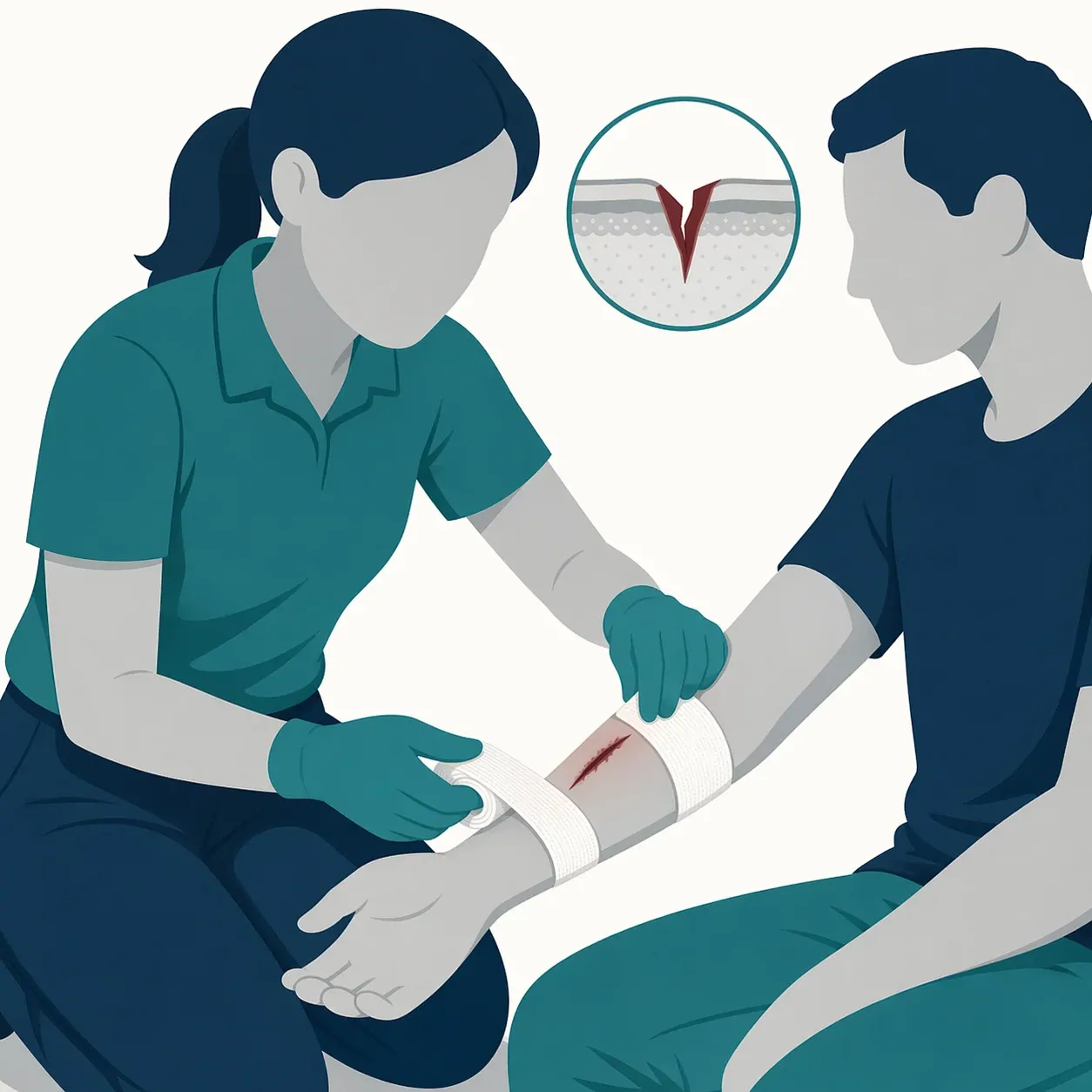
A laceration is a deep, open cut or tear in the skin. It happens when the skin is broken or split by something sharp, such as a knife, broken glass, or a rough object. Lacerations can cause bleeding and may need first aid care. Understanding what a laceration is and how to help someone with one is important for keeping people safe and helping stop the bleeding.
What Is a Laceration?
A laceration is different from a small scrape or scratch. It is a more serious wound where the skin is torn or cut by something sharp. Sometimes, the edges of the skin in a laceration look jagged or uneven. Sometimes, the cut is smooth, but it still goes deep enough to cause bleeding. Lacerations can happen to anyone, anywhere. They can be caused by accidents in the home, workplace, or outdoors.
Why Are Lacerations Important in First Aid?
Lacerations are important to know about in first aid because they can bleed a lot. The skin has many small blood vessels under it. When these blood vessels are cut, blood can come out fast. If a laceration is deep or cuts a big blood vessel, the bleeding may be heavy. This can be dangerous if it is not stopped.
Also, lacerations can allow germs to get inside the body. This can lead to infections, which means the wound may get red, swollen, and painful, and take longer to heal. So, it is important to clean and protect a laceration to stop infection.
What Happens in the Body During a Laceration?
When the skin is cut, the body starts to respond right away to try to stop the bleeding. Blood cells called platelets gather at the cut to form a clot or scab. This helps to seal the wound. At the same time, the immune system works to send cells to fight off any germs that might have entered.
If the cut is deep, it may also reach muscles, nerves, or even bones. This can cause more pain and may affect how the part of the body moves or feels. In serious cases, a laceration may need medical attention to fix damaged tissues.
What You Might See or Notice
If someone has a laceration, you may notice bright red blood coming from the cut. The skin edges might be clearly separated, and the wound may look open. The person might feel pain or burning around the cut.
If the cut is very deep, the person might have trouble moving the part of the body with the injury. There might be numbness or tingling if nerves are affected. Also, if the bleeding is heavy, the person might feel weak, dizzy, or even faint.
How to Help Someone with a Laceration
The main goal of first aid for a laceration is to stop the bleeding, keep the wound clean, and protect it to help healing. You can help by pressing a clean cloth or dressing firmly over the cut to stop or slow down the bleeding.
If possible, try to keep the injured part raised above the level of the heart. This helps reduce blood flow to the area and can slow bleeding. Avoid touching the cut with your fingers to keep germs out.
If the bleeding does not stop after a few minutes of pressure, or if the cut is very large or deep, it is important to get medical help right away. Serious lacerations may need stitches or other treatments.
Safety and When to Call Emergency Services
Always be careful when helping with a laceration. Use gloves if you have them to protect yourself and the injured person from infection. If you do not have gloves, try to keep your hands clean and avoid direct contact with blood.
Call 000 in Australia if the bleeding is very heavy and will not stop. Also call for help if the person loses a lot of blood, feels faint or confused, or if the cut is very deep, wide, or caused by something dirty or rusty. If you think the cut might have injured muscles, nerves, or bones, get emergency help.
If you cannot control the bleeding or the wound is in the face, neck, or over a joint, it is better to get a doctor to have a look. Also, if the person has not had a tetanus shot in the last five years or is unsure, they should see a healthcare professional.
Keeping the Wound Clean and Protected
After the bleeding has stopped, it is important to keep the laceration clean. Wash your hands before touching the wound. Gently rinse the cut with clean water to remove any dirt or small bits of debris.
Do not use strong chemicals like iodine or hydrogen peroxide directly on the wound as these can damage the tissue. Cover the cut with a clean dressing or bandage to keep dirt out.
Change the dressing daily or whenever it gets wet or dirty. Watch the wound for signs of infection such as redness, swelling, warmth, increasing pain, or pus (a thick yellow or green fluid).
Letting the Wound Heal
The body usually heals a laceration by growing new skin cells and closing the cut. Smaller cuts may heal quickly in a few days. Bigger or deeper lacerations take more time. It is normal for the skin around the cut to be tender or itchy as it heals.
Avoid picking at scabs or scratching the wound as this can cause scarring or infection. Keep the area protected from the sun because healing skin is sensitive.
Summary
A laceration is a deep cut or tear in the skin that can bleed a lot and may need first aid care. The main things to do are to stop the bleeding by pressing on the cut, keep the wound clean, and protect it while it heals.
Be careful and use clean cloths or gloves if you can, and ask for emergency help by calling 000 if the bleeding is heavy or the cut is serious. By knowing what a laceration is and how to help, you can make sure someone with a cut stays safe and gets the right care.
Related glossary terms: Wound Care and Severe Bleeding.
Sources reviewed
- Healthdirect: wounds, cuts and grazes
- ANZCOR Guideline 9.1.1: First aid for management of bleeding
- Triple Zero: official emergency calling guidance
Reviewed against Australian first aid and emergency guidance by the First Aid Glossary Editorial Team. This article is general information and does not replace emergency-operator directions, professional medical advice or hands-on first aid training.
