
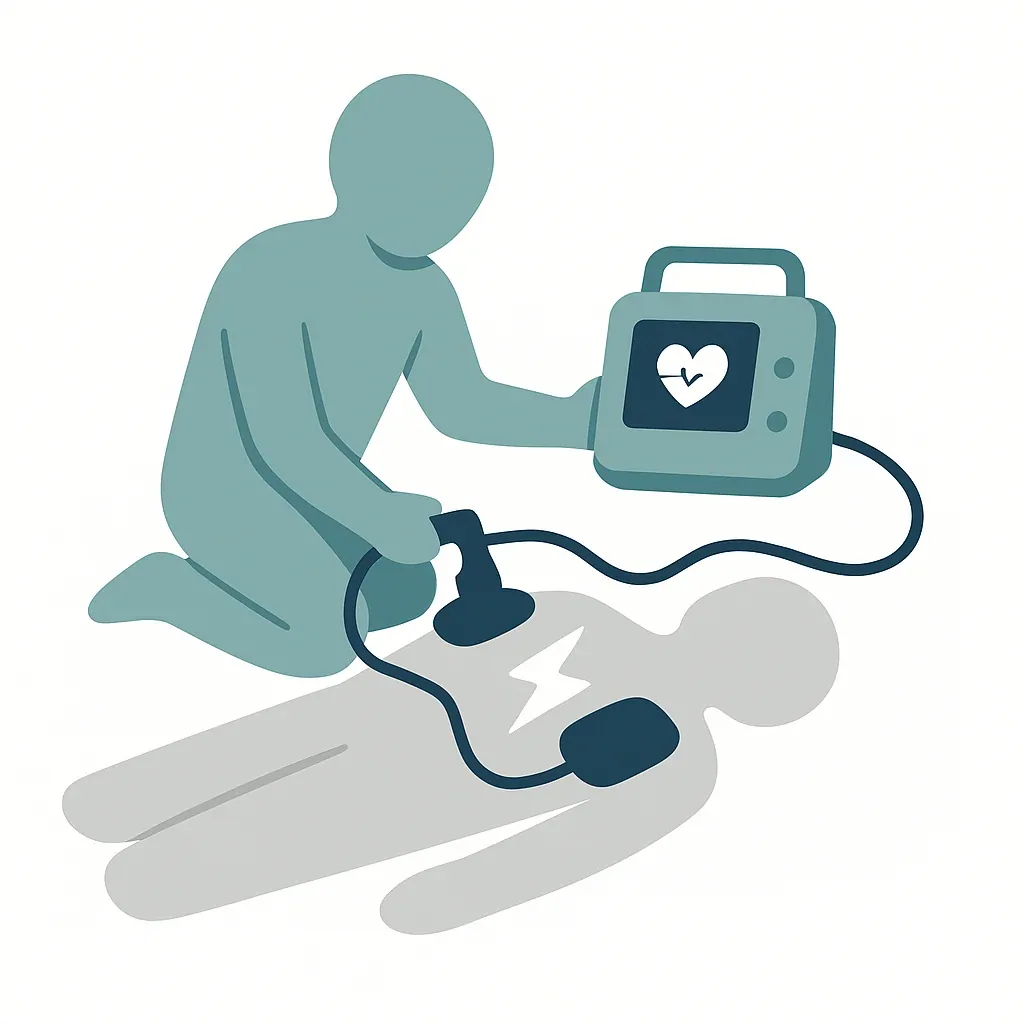

A defibrillator is a device that analyses a person’s heart rhythm and, when appropriate, delivers an electrical shock. In public first aid, the device most people will encounter is an automated external defibrillator (AED).
What a defibrillator does
A defibrillator does not give a shock just because someone has collapsed. An AED assesses the rhythm first and gives clear voice or visual prompts. If a shock is advised, it tells the responder what to do; if not, it guides the responder to continue CPR.
Using an AED in first aid
- For a person who is unresponsive and not breathing normally, call
000and begin CPR. - Send someone to get an AED, or get one yourself if you are alone and it is immediately available.
- Turn the AED on, attach the pads as illustrated, and follow every prompt.
- Make sure nobody is touching the person while the device is analysing or delivering a shock.
- Resume CPR straight away when the AED tells you to do so.
Why speed matters
AEDs are designed for bystanders. You do not need to decide whether a shock is needed or wait for a trained person—the device makes that decision. Attach it as soon as it is available while continuing CPR as directed.
Children and AEDs
For children younger than 8 years, paediatric pads and a child setting are preferred when available. If they are not available, use standard adult pads and follow the AED’s instructions. The emergency call-taker can also give guidance while help is on the way.
How this term fits into the glossary
Defibrillator is the broad device term. Automated External Defibrillator explains the public-use version in more detail, while Defibrillation explains the process of delivering a shock.
Quick answer
A defibrillator is a device that may restore certain dangerous heart rhythms with an electrical shock. In a cardiac-arrest emergency, start CPR, attach an AED as soon as possible, follow its prompts, and keep people clear during analysis and any shock.
For independent Australian guidance, see healthdirect’s CPR and AED guide.
Sources reviewed
Reviewed against current Australian first aid and emergency guidance by the First Aid Glossary Editorial Team. This article is general information and does not replace emergency-operator directions, professional medical advice or hands-on first aid training.


