
Hives are an itchy, raised skin rash that can appear suddenly and move around the body. They are also called Urticaria. In first aid, hives matter because they can be part of a mild reaction, an early sign of a more serious allergic emergency, or happen alongside deeper swelling called Angioedema.
What are hives?
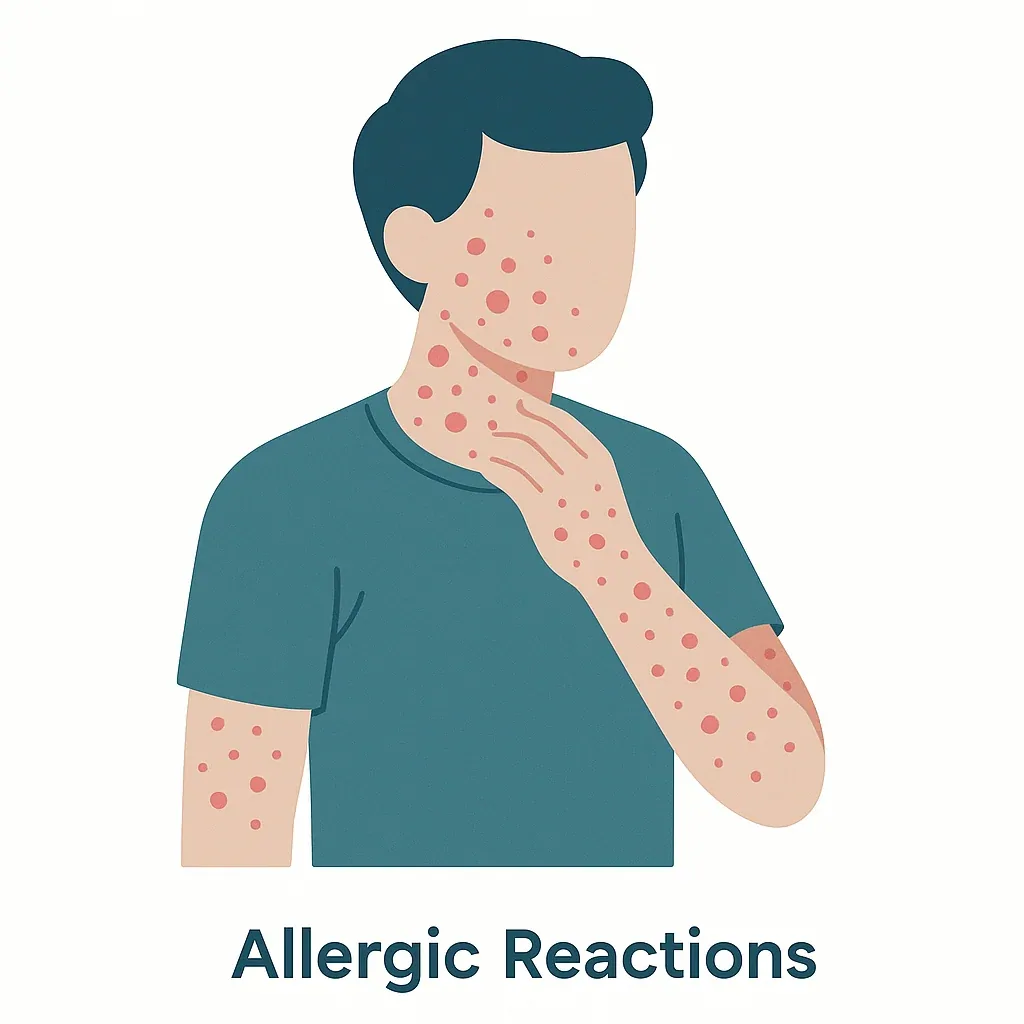
Hives are raised bumps or welts on the skin. They are often itchy, and they may look red or skin-coloured.
The rash can:
- appear suddenly
- change shape
- join into larger patches
- disappear in one place and show up somewhere else
Hives can last for minutes or hours, and sometimes longer.
What can cause hives?
Hives can happen for different reasons. Sometimes they are linked to an allergy, but not always.
Possible triggers include:
- Allergic Reaction
- foods
- medicines
- infections
- insect stings or bites
- heat, cold, or pressure on the skin
Sometimes the exact trigger is not clear.
How are hives different from angioedema?
Hives are usually a surface skin rash.
Angioedema is deeper swelling under the skin. It often affects the lips, eyelids, tongue, or throat. Hives and angioedema can happen together, and that can matter in first aid if swelling is moving toward the mouth or airway.
When are hives a first aid concern?
Hives on their own are often uncomfortable but not life-threatening. The bigger concern is whether hives are happening with signs of a severe reaction.
Treat the situation as more urgent if hives happen with:
- swelling of the tongue or throat
- wheeze or trouble breathing
- dizziness or collapse
- vomiting after a likely allergen exposure
- deeper swelling such as Angioedema
- signs of Anaphylaxis
What should you do in first aid?
If someone has hives:
- Stay calm and check what other symptoms are happening.
- Remove the likely trigger if it is safe to do so.
- Watch closely for breathing trouble or swelling.
- Ask whether the person has a known allergy and carries an Adrenaline Auto-Injector.
- If you know the brand, check whether it is an EpiPen or Anapen.
- Call
000if symptoms become severe or the person is getting worse.
If severe allergy signs suggest anaphylaxis, help with the prescribed auto-injector immediately. The medicine inside is Epinephrine, also called adrenaline.
Do hives always mean an allergy?
No. Hives can happen for reasons other than allergy, including infections or physical triggers such as heat or pressure.
That said, hives can still be one part of an allergic reaction, so it is important to look at the whole picture instead of the skin rash alone.
How is this page different from urticaria?
This page uses the common everyday term hives.
Urticaria is the medical word for the same kind of rash. That page explains the clinical term and points back here for the main plain-English overview.
If you want the device overview page, read Adrenaline Auto-Injector.
Summary
Hives are an itchy, raised rash that can happen for many reasons, including allergies, medicines, infections, or other triggers. On their own they are often not dangerous, but they matter in first aid because they can appear as part of a more serious allergic reaction or happen alongside angioedema. Watch for breathing trouble, throat swelling, dizziness, or collapse, and call 000 if severe symptoms appear.
Sources reviewed
- ASCIA: First Aid Plan for Anaphylaxis
- ASCIA: anaphylaxis resources and action plans
- Triple Zero: official emergency calling guidance
Reviewed against current Australian allergy and emergency guidance by the First Aid Glossary Editorial Team. This article is general information and does not replace a person’s prescribed ASCIA Action Plan, emergency-operator directions, medical advice or hands-on first aid training.