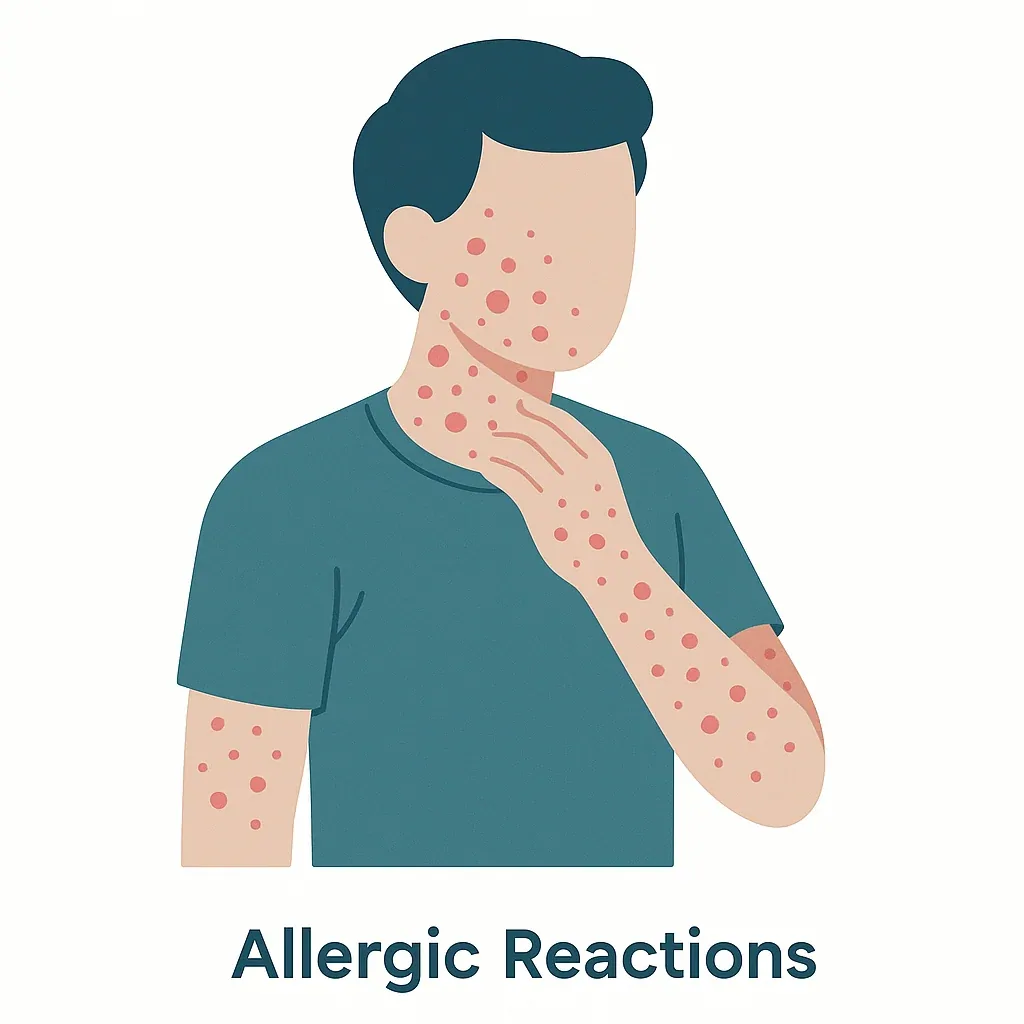

Angioedema is swelling deeper under the skin than an ordinary rash. It often affects the lips, eyelids, face, tongue, or throat. In first aid, it matters because it can happen with Hives, can be part of an Allergic Reaction, and can become an emergency if breathing or the airway is affected.
What is angioedema?
Angioedema is deeper swelling in the tissues under the skin or under the lining of the mouth, throat, or gut.
Common areas affected include:
- the lips
- the eyelids
- the face
- the tongue
- the throat
It can happen with Urticaria or hives, but it can also happen on its own.
What can cause angioedema?
Angioedema has more than one possible cause. It may be linked to:
- allergies
- medicines
- infections
- physical triggers
- other medical causes
Sometimes the swelling is mild and settles. Sometimes it is a warning sign that the reaction is becoming more serious.
When is angioedema a first aid concern?
Angioedema is more urgent if it affects the tongue, throat, or breathing.
Get urgent help if the person has:
- swelling of the tongue
- swelling or tightness in the throat
- trouble breathing
- wheeze or persistent cough
- dizziness or collapse
- signs of Anaphylaxis
If the swelling is only around the skin and the person is otherwise well, it may still need medical advice, but it is not always an immediate life-threatening emergency.
What should you do in first aid?
If someone has angioedema:
- Check what other symptoms are happening.
- Look for signs that the mouth, tongue, throat, or breathing are involved.
- Remove the likely trigger if it is safe to do so.
- Ask whether the person has a known allergy and carries an Adrenaline Auto-Injector.
- If severe allergy signs are present, help with the prescribed auto-injector straight away.
- Call
000if swelling is affecting breathing, the tongue, the throat, or the person is getting worse.
If you know the brand of auto-injector, follow the correct steps for EpiPen or Anapen. The medicine inside is Epinephrine, also called adrenaline.
If the person becomes Unresponsive and is not breathing normally, start CPR.
How is this page different from hives?
Hives are usually a raised, itchy rash on the surface of the skin.
Angioedema is deeper swelling under the skin. The two can happen together, but they are not exactly the same thing.
If you want the broad severe-emergency page, read Anaphylaxis.
Summary
Angioedema is deeper swelling under the skin, often affecting the lips, eyelids, face, tongue, or throat. It can happen with hives or on its own. In first aid, the key concern is whether the swelling is affecting the airway or is part of anaphylaxis, because that needs urgent treatment.
Sources reviewed
- ASCIA: First Aid Plan for Anaphylaxis
- ASCIA: anaphylaxis resources and action plans
- Triple Zero: official emergency calling guidance
Reviewed against current Australian allergy and emergency guidance by the First Aid Glossary Editorial Team. This article is general information and does not replace a person’s prescribed ASCIA Action Plan, emergency-operator directions, medical advice or hands-on first aid training.