
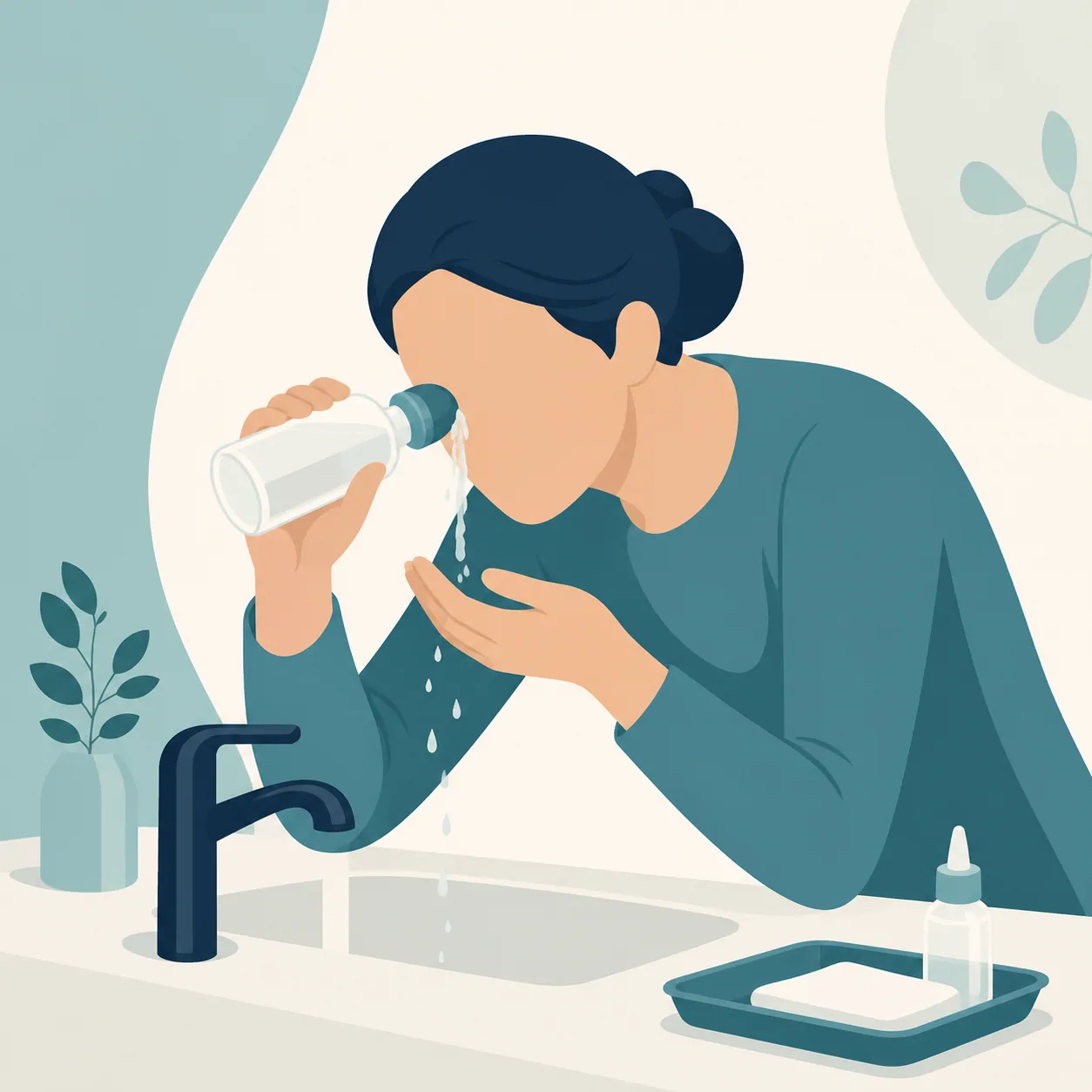

Saline solution definition
Saline solution is sterile salt water. In first aid, single-use saline can be used to gently rinse a minor wound or flush a loose irritant from the eye when it is available. It is useful because it is clean, mild and convenient in a first-aid kit, car, sport bag or workplace.
Saline is not a cure-all. It does not remove an embedded object, close a deep wound, treat infection, neutralise a chemical or replace emergency assessment. Clean running water is also an appropriate and often more immediately available option for many minor wound and eye-rinsing situations. The priority is safe, prompt action—not finding a particular bottle.
When saline may be useful
Use unopened sterile saline to rinse visible surface dirt from a minor cut or graze after bleeding is controlled. It can also gently flush a loose speck of dust, sand or eyelash from an eye when there is no chemical exposure, high-speed injury, embedded object or change in vision.
Saline is particularly handy when clean running water is not close by, such as at a sports ground, in a vehicle, while camping or in a portable first-aid kit. It can help a first aider clean a minor wound before applying a sterile dressing or encourage gentle eye flushing without rubbing.
Do not delay urgent care to look for saline. For severe bleeding, apply direct pressure and call Triple Zero (000). For a chemical in the eye, start irrigation immediately with clean running water if that is what is available. For a penetrating eye injury or embedded object, do not irrigate or attempt removal; protect the eye and seek emergency care.
Rinsing a minor wound
Start by making the area safe and washing your hands. Wear disposable gloves if contact with blood or body fluids is likely. Apply firm direct pressure with a clean dressing until minor bleeding stops. If bleeding is severe, persistent, spurting or associated with faintness, confusion or a serious injury, call 000 rather than moving on to wound rinsing.
Once bleeding is controlled, hold the saline container so the tip does not touch the wound, skin, fingers or another surface. Gently pour or squirt saline across the wound to wash away loose dirt. Avoid high pressure, deep probing or repeated scrubbing. Pat the surrounding skin dry with a clean pad and cover with a sterile dressing.
If dirt, glass, wood, metal or grit does not rinse away easily, stop. Do not dig into the wound with tweezers or use more forceful irrigation at home. Seek medical advice for retained material, deep wounds, bites, punctures, contaminated wounds, wounds over joints or any injury with numbness or reduced movement.
Flushing a loose eye irritant
Ask the person not to rub their eye. Wash hands first. Tilt the head so the affected eye is lower than the unaffected eye and saline can flow away from the other eye. Encourage gentle blinking while you flush the eye with saline. A sink, clean towel or bowl can catch the fluid.
Use a gentle stream. Do not press the bottle tip against the eye or eyelid, and do not use tweezers, cotton buds or fingers to sweep the eyeball. If the loose speck does not flush out, pain persists, the eye is very red, vision is blurred, light is painful, blood is present or the injury happened during grinding, drilling, cutting or another high-speed activity, seek prompt medical care.
If a person wears contact lenses, do not keep wearing them after an eye irritation or injury. Remove a lens only if it comes out easily during flushing and the injury clearly appears minor; do not struggle with a lens in a seriously injured eye.
Chemical splashes need water now
For a chemical splash in the eye or on skin, do not wait for saline. Go to the nearest safe water source and flush continuously. For an eye exposure, keep the affected eye lower so water does not wash into the other eye. In Australia, call Triple Zero (000) for a chemical in the eye or seek emergency department care, and call the Poisons Information Centre on 13 11 26 for product-specific advice while irrigation continues.
Do not try to neutralise a chemical with another chemical, use eye drops or ointment, or stop flushing because pain improves. A small saline ampoule is not enough for a serious chemical exposure. Water first, emergency help next.
Do not use saline for every eye injury
Do not use saline to remove an embedded object, a penetrating object or a suspected metal fragment from high-speed work. Do not press on the eye. Cover it loosely without pressure if appropriate and seek urgent medical assessment.
For eye pain with reduced vision, severe light sensitivity, bleeding, a misshapen eye, significant facial trauma or a person who cannot open the eye, treat the situation as urgent. A clinician or optometrist has equipment to examine and remove material safely.
Saline can support first aid for a loose irritant; it cannot diagnose a scratch, ulcer, fracture or internal eye injury.
Single-use containers and hygiene
Choose sterile saline in sealed, single-use containers for a first-aid kit. Check expiry dates and packaging during regular kit inspections. Once opened, do not save a single-use ampoule for later use. The tip can become contaminated even if it looks clean.
Keep the bottle or ampoule from touching the wound or eye. If it does touch, discard it after use. Store saline away from extreme heat, dirt and direct sunlight. Make sure it is clearly labelled so it is not confused with medication, contact-lens solutions or household products.
At work, keep saline near the first-aid kit and relevant areas, but do not rely on it in place of required eyewash facilities or emergency showers for chemical risks.
Children and travel
For a child, explain that saline may feel wet or strange but should not hurt sharply. Do not force an eye open against strong resistance or continue if the child is very distressed; seek professional help. Use a low threshold for medical advice after an eye injury, chemical exposure, high-speed toy injury or a wound contaminated by dirt or water.
When travelling or camping, pack several single-use saline containers, but remember that a reliable water source, emergency contacts and accurate location details are equally important. A kit is a support, not a substitute for getting help.
Common mistakes to avoid
Do not use expired or opened saline, touch the nozzle to the wound or eye, dig for debris, use it as a chemical neutraliser or delay urgent care for a serious eye injury. Do not share a container between people.
For simple cases, saline helps with gentle cleaning. For concerning cases, emergency assessment is the safer next step.
Related glossary terms
Sources reviewed
- Healthdirect: objects or chemicals in the eye
- Healthdirect: wounds, cuts and grazes
- Healthdirect: chemical burns
- Healthdirect: first aid basics
Reviewed against Australian first aid and emergency guidance by the First Aid Glossary Editorial Team. This article is general information and does not replace emergency services, professional medical advice or hands-on first aid training.


