
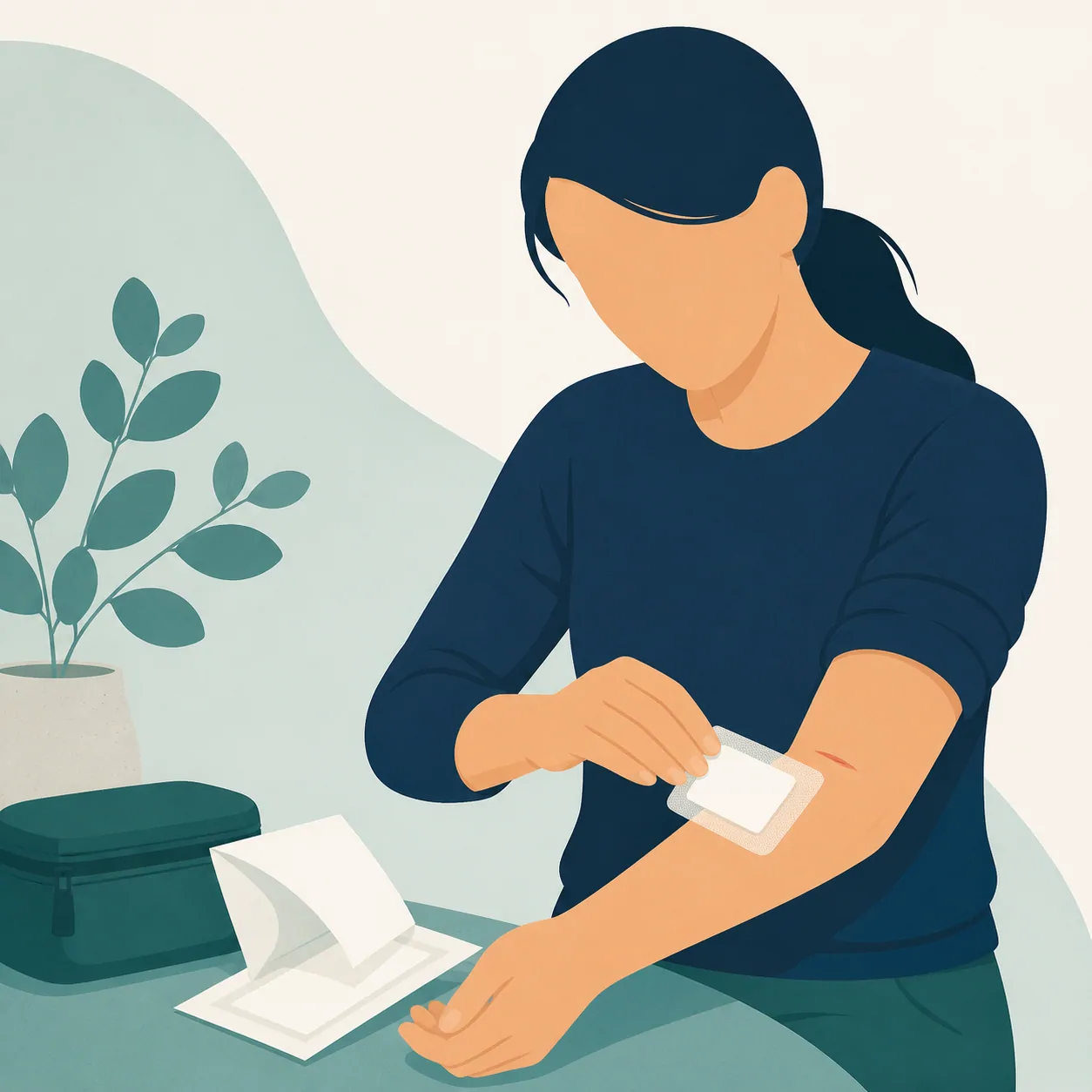

- Sterile dressing definition
- Choose the right dressing for the wound
- Prepare before opening the package
- Open and apply a sterile dressing
- When the dressing gets wet or dirty
- Dressing a wound with an embedded object
- Dressings for burns
- Children, work and sport
- Common mistakes to avoid
- Related glossary terms
- Sources reviewed
Sterile dressing definition
A sterile dressing is a clean wound covering supplied in sealed packaging to help protect an injury from dirt, friction and germs. It can help control minor bleeding, absorb fluid and keep a wound covered while it heals or while professional care is arranged. Sterile dressings are a core part of most first-aid kits.
“Sterile” describes the dressing before the package is opened. Once a dressing is touched, dropped, placed on a dirty surface or used on a wound, it is no longer sterile. Good first aid is therefore about simple clean technique: wash hands, wear gloves where appropriate, avoid touching the wound-contact surface and use a fresh dressing when needed.
Choose the right dressing for the wound
For a small cut or graze, an adhesive strip or small sterile pad may be enough. For a larger minor wound, choose a sterile non-stick dressing with enough coverage to protect the area. For bleeding, use an absorbent pad that allows firm direct pressure. For a burn, use a loose, non-stick covering after cooling with running water; do not press sticky materials into damaged skin.
The dressing should be big enough to cover the wound and any immediate surrounding area without repeatedly shifting. Do not use a tiny strip on a wound that needs pressure or a large, bulky pad that prevents movement or circulation. If the wound is deep, gaping, heavily contaminated, from a bite or puncture, contains an embedded object, is near the eye or does not stop bleeding, seek medical assessment rather than relying on a home dressing.
Keep a range of sizes in the kit. A single oversized dressing is not always useful for fingers, knees, elbows or a child’s small limb. Check packaging and expiry dates during regular kit inspections.
Prepare before opening the package
Make the scene safe. Wash hands with soap and water where possible, or use hand hygiene if washing facilities are not immediately available. Wear disposable gloves if there is likely contact with blood or body fluids. Put clean supplies within reach before opening the dressing packet.
Control bleeding first. Apply firm direct pressure with a clean dressing or cloth. Hold steady pressure rather than lifting the pad every few seconds to look. If blood soaks through, add another pad over the first and keep pressing. Do not remove the first layer simply to inspect the wound.
For a minor wound once bleeding is controlled, rinse visible dirt away with clean running water or sterile saline. Pat the surrounding skin dry. Do not scrub raw tissue, dig for debris or use a dressing to hide a wound that needs professional care.
Open and apply a sterile dressing
Check that the package is sealed, dry and in date. Open it from the edges without touching the side that will sit against the wound. Hold the dressing by the corners or outer backing. If it falls on the floor or the clean surface is touched by an ungloved hand, discard it and use a new one.
Place the pad gently over the wound. For a bleeding injury, maintain direct pressure. For a non-bleeding wound, cover without pressing hard. Secure the dressing with tape, a bandage or its built-in adhesive. The dressing should stay in place but should not be tight enough to cause numbness, tingling, pale or blue skin, cold fingers or increasing pain.
After securing a limb dressing, check circulation beyond it. Ask whether the person can feel and move their fingers or toes if the injury allows. Loosen and reapply the bandage if signs of restricted circulation occur. Never cover the face in a way that affects breathing.
When the dressing gets wet or dirty
Replace a dressing that becomes wet, dirty, loose or soaked with blood. Wash hands and use a fresh dressing each time. Do not re-use a removed pad, and do not put the used dressing back into the kit.
For a small healing wound, change timing can follow product instructions and the wound’s condition. Avoid peeling away a dressing repeatedly just to check it. If the dressing sticks to the wound, soak the edges with clean water as appropriate and remove gently; do not rip off healing tissue.
Watch for increasing pain, spreading redness, warmth, swelling, pus, fever, red streaks or a bad smell. These can indicate infection or a problem that needs clinical advice. A dressing is protective; it does not treat an infection on its own.
Dressing a wound with an embedded object
If glass, metal, wood or another object is stuck in a wound, do not remove it. Apply pressure around the object, place pads around it to limit movement and secure them carefully without pushing the object deeper. Seek urgent medical help.
Do not lay a flat dressing directly over the object and press down. Do not cut around the object, pull it out or ask the person to move the injured part. Call Triple Zero (000) for severe bleeding, a serious injury, faintness, breathing difficulty or any rapidly worsening condition.
This is one of the most important dressing boundaries: a dressing should protect, not turn a penetrating injury into a home project.
Dressings for burns
For a thermal burn, cool the burn with cool running water for at least 20 minutes as soon as possible. Remove jewellery and loose clothing near the burn if it is not stuck. Do not use ice, butter, toothpaste, adhesive strips or ointments on a fresh significant burn.
Once cooled, cover the burn loosely with a clean non-stick dressing or clean plastic cling film applied lengthways, not tightly wrapped around a limb. Do not pop blisters or peel clothing stuck to skin. Seek urgent care for large, deep, chemical, electrical or inhalation burns; burns to the face, hands, feet, genitals or major joints; or burns in babies and young children.
Children, work and sport
For a child, explain what you are doing before touching the wound and involve a parent, guardian or responsible adult. Use a dressing size that will not become a choking hazard if removed. Check that a child’s bandage is not too tight and that they do not pick at the wound.
At work, keep dressings accessible and replace stock after use. Record a significant incident according to policy and report hazards that caused the injury. At sport, a dressing can control a small cut, but it should not automatically mean the person can return to play. Consider bleeding control, contamination, pain, head injury and relevant sport rules.
Common mistakes to avoid
Do not touch the wound-contact surface, use a package that is torn or expired, wrap a bandage too tightly, keep a wet dressing on, remove embedded objects or use a dressing to delay assessment of a serious wound. Do not assume sterile means “safe for every injury.”
For severe bleeding, apply direct pressure and call 000 early. For minor wounds, clean, cover, monitor and seek advice if there are risk features or worsening symptoms.
Related glossary terms
Sources reviewed
- Healthdirect: wounds, cuts and grazes
- ANZCOR Guideline 9.1.1: bleeding management
- Healthdirect: burns and scalds
- Healthdirect: first aid basics
Reviewed against Australian first aid and emergency guidance by the First Aid Glossary Editorial Team. This article is general information and does not replace emergency services, professional medical advice or hands-on first aid training.


