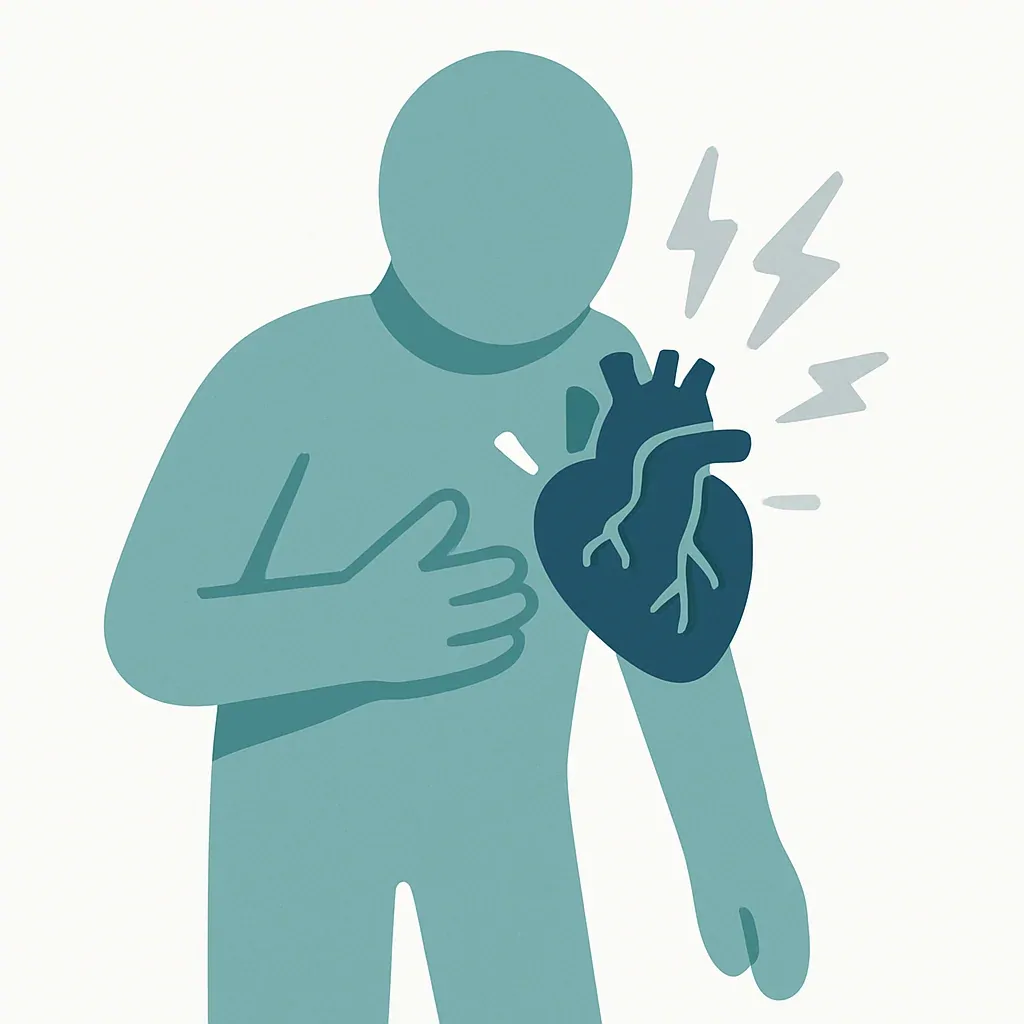

Heart attack means part of the heart muscle is not getting enough blood. It is a medical emergency because the longer the blockage lasts, the more damage happens to the heart.
What is a heart attack?
A heart attack happens when blood flow through a coronary artery is blocked or suddenly reduced. This stops oxygen from reaching part of the heart muscle. The blocked blood flow can damage the heart within minutes, so rapid action matters.
Heart attack is not the same thing as Cardiac Arrest. A heart attack is a circulation problem inside the heart. Cardiac arrest is when the heart stops pumping blood effectively. A heart attack can sometimes lead to cardiac arrest, but they are not interchangeable terms.
Why it matters in first aid
First aid does not remove the blockage causing the heart attack, but it can buy time and reduce risk while urgent medical treatment is on the way. Good first aid focuses on calling an ambulance early, helping the person rest, and watching closely for any sign that they are getting worse.
Common signs of a heart attack
Heart attack symptoms do not look the same in every person. Common warning signs include:
- chest pain, pressure, tightness, heaviness, or squeezing
- pain that spreads to the arm, shoulder, neck, jaw, back, or upper stomach
- shortness of breath
- sweating or cold clammy skin
- nausea or vomiting
- dizziness, weakness, or feeling faint
- unusual fatigue or a strong feeling that something is very wrong
Some people have milder or less typical symptoms, especially older adults, women, and people with diabetes.
What to do if you think someone is having a heart attack
If you suspect a heart attack:
- Call
000immediately and ask for an ambulance. - Help the person stop what they are doing and rest.
- Sit them in a comfortable position, usually upright or half-sitting.
- Keep them calm and stay with them.
- If they have their own prescribed angina medicine, help them take it the way they normally would.
- If they are conscious, not allergic, and not already being told not to take it, aspirin may be considered while waiting for emergency advice or ambulance care.
Do not let the person drive themselves to hospital if severe symptoms are ongoing. Calling an ambulance is safer because paramedics can begin treatment on the way.
When the emergency becomes worse
Heart attack can worsen suddenly. Act urgently if the person:
- becomes more breathless
- becomes pale, sweaty, or confused
- collapses
- becomes Unresponsive
- is not breathing normally
If the person becomes unresponsive and is not breathing normally, follow Primary Survey or DRSABCD and start CPR. Chest Compressions are the main pumping action in CPR. If an Automated External Defibrillator is available, use it. This shift to CPR and AED use applies if the heart attack has progressed to cardiac arrest, not to an ordinary conscious heart-attack presentation.
Heart attack compared with cardiac arrest and heart failure
A heart attack is not the same as Cardiac Arrest or Heart Failure.
- Heart attack means blocked blood flow is damaging the heart muscle.
- Cardiac arrest means the heart has stopped pumping blood effectively.
- Heart failure means the heart is not pumping as strongly as it should over time or during a worsening episode.
Knowing the difference helps you respond more clearly. A conscious person with chest pain usually needs urgent ambulance care and rest. An unresponsive person who is not breathing normally needs CPR immediately.
Quick answer
Heart attack means blocked blood flow is damaging the heart muscle. Call 000, keep the person resting and calm, and watch closely for collapse or abnormal breathing. If they become unresponsive and are not breathing normally, start CPR and use an Automated External Defibrillator if one is available.
How this page is checked
Publisher: First Aid Glossary Editorial Team
Last reviewed: 28 April 2026
Reviewed against: ANZCOR Guideline 9.2.1 – Recognition and First Aid Management of Suspected Heart Attack, Healthdirect Australia heart attack information, and Triple Zero emergency-call guidance.
This page is educational and explains first aid language in plain English. It is not personal medical advice, diagnosis, or a replacement for accredited first aid training. In an emergency in Australia, call Triple Zero (000).
Sources reviewed
Reviewed against Australian first aid and emergency guidance by the First Aid Glossary Editorial Team. This article is general information and does not replace emergency-operator directions, professional medical advice or hands-on first aid training.