
Chest compressions are the repeated pushes on the centre of the chest used during CPR. Their job is to help keep some blood moving to the brain and other vital organs when a person is Unresponsive and not breathing normally.
What are chest compressions?
Chest compressions are the main pumping action in CPR.
By pressing down firmly on the centre of the chest and then letting it come back up, you help squeeze blood through the body until more advanced help arrives.
When are chest compressions used?
Chest compressions are used when a person:
- is unresponsive
- is not breathing normally
- may be in Cardiac Arrest
This fits inside the same early emergency pathway as Primary Survey, DRSABCD, and Basic Life Support.
Why do chest compressions matter?
Without blood flow, the brain and other vital organs are quickly starved of oxygen.
Chest compressions help buy time until paramedics arrive or an Automated External Defibrillator can be used.
What should you do before starting them?
- Make sure the area is safe.
- Check for a response.
- Call
000or send someone else to call. - Open the airway. The broader page for this step is Airway Management.
- Check whether the person is breathing normally.
- If they are unresponsive and not breathing normally, start CPR.
How are chest compressions given?
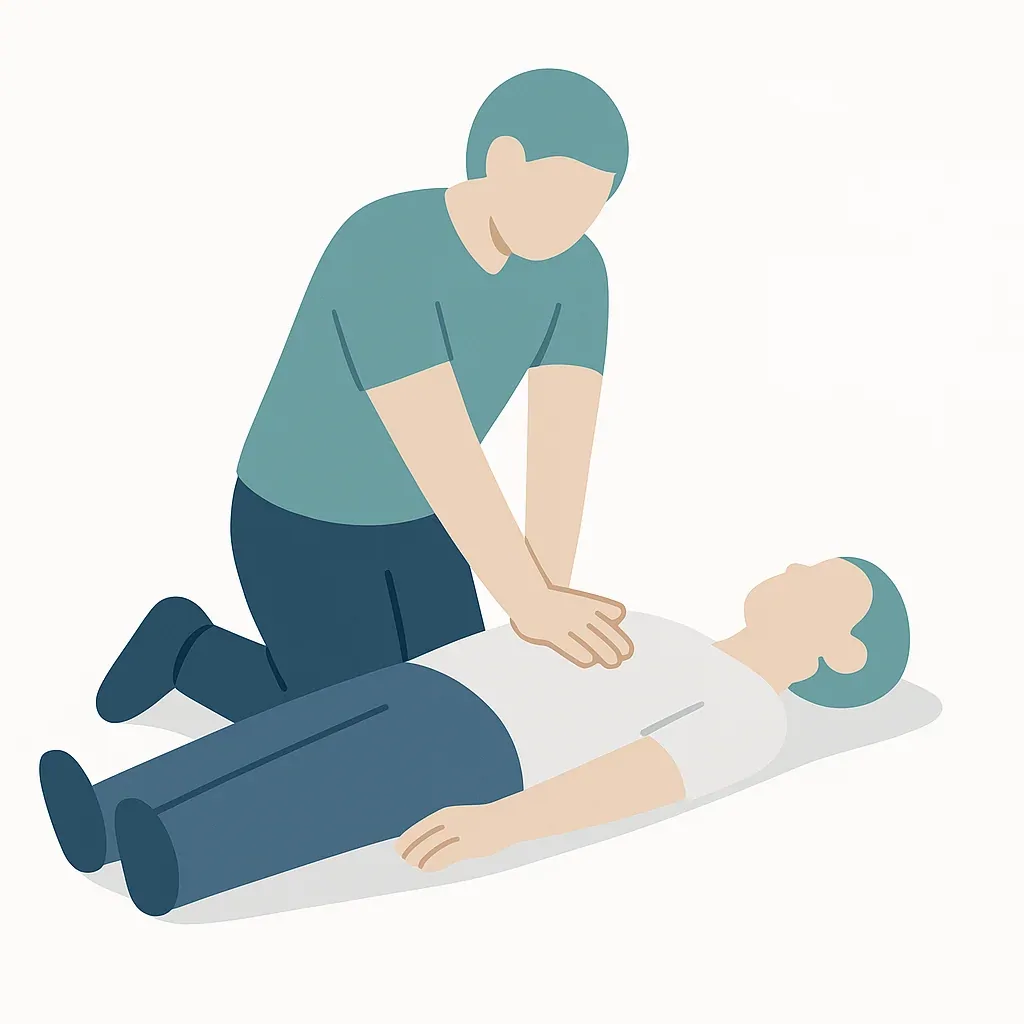
For an adult, place the heel of one hand on the centre of the chest, put your other hand on top, and press down hard and fast.
First aiders are commonly taught to:
- press the chest down about 5 to 6 centimetres
- allow the chest to come back up fully after each push
- aim for about 100 to 120 compressions per minute
When do you stop?
Keep going until:
- the person starts breathing normally or shows clear signs of life
- trained medical help takes over
- you cannot continue safely
- you are physically unable to keep going
If an AED is available, use it as soon as possible and follow the prompts.
Quick answer
Chest compressions are the main pumping action in CPR. They are used when a person is Unresponsive and not breathing normally, especially if Cardiac Arrest is suspected.
How this page is checked
Publisher: First Aid Glossary Editorial Team
Last reviewed: 9 August 2026
Reviewed against: ANZCOR Guideline 8 – Cardiopulmonary Resuscitation and Healthdirect Australia CPR guidance.
This page is educational and explains first aid language in plain English. It is not personal medical advice, diagnosis, or a replacement for accredited first aid training. In an emergency in Australia, call Triple Zero (000).