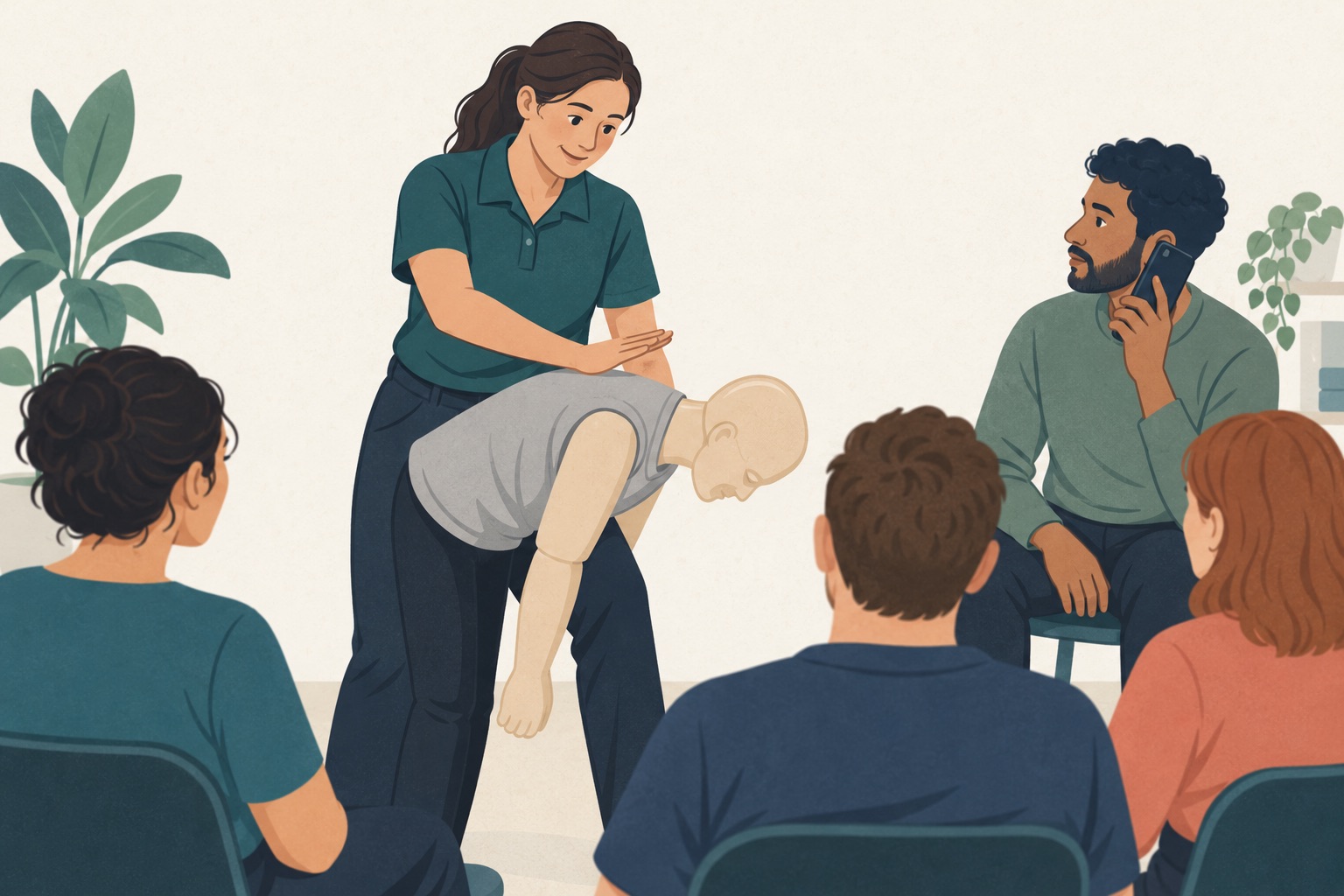

Quick answer: Artificial respiration is a broad, older term for helping a person breathe when they cannot breathe normally on their own. In modern Australian first aid, the practical response is to follow DRSABCD, call Triple Zero (000), start CPR if the person is unresponsive and not breathing normally, and use an AED as soon as one is available.
What does artificial respiration mean?
Artificial respiration describes breathing support provided when a person’s own breathing is absent or ineffective. In first aid, you may see the term in older material or in a broad description of resuscitation. The clearer practical terms are rescue breaths, ventilation and CPR.
How does it relate to CPR?
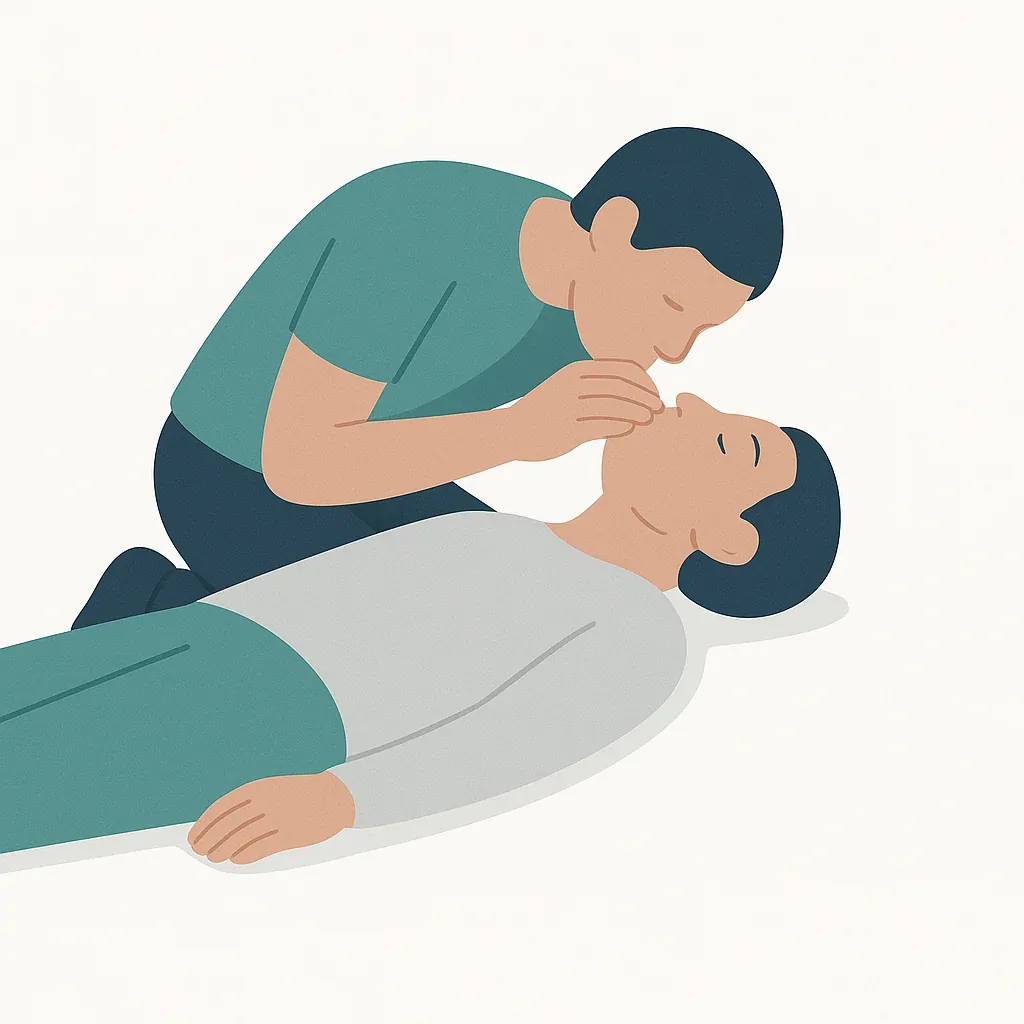
CPR combines chest compressions with rescue breaths. ANZCOR advises starting CPR when a person is unresponsive and not breathing normally, including when they are only gasping. All rescuers should give chest compressions; people who are trained and willing to give rescue breaths are encouraged to do so. Rescue breaths are therefore one part of the CPR response, rather than a separate reason to delay compressions or calling for help.
What should a first aider do?
Check for danger, check responsiveness and breathing, send for help, open the airway and start CPR if the person is unresponsive and not breathing normally. Call Triple Zero (000), or ask another person to call, and attach an AED as soon as it is available. Follow the operator’s and AED’s prompts. Do not attempt equipment-based ventilation unless you are trained to use it.
Why the wording can be confusing
Artificial respiration can refer to several ways of assisting breathing, including rescue breaths and equipment used by trained responders. For a bystander, the important decision is not choosing the label: it is recognising abnormal breathing, getting emergency help early and starting the appropriate CPR response.
When to get urgent help
A person who is unresponsive and not breathing normally needs an emergency response. Call Triple Zero (000) immediately. Continue CPR until the person starts breathing normally, a health professional takes over, you are physically unable to continue, or a health professional directs you to stop.
Related first aid terms
See Rescue Breaths, CPR, Basic Life Support and Agonal Breathing.
How this page is checked
Publisher: F.A.G. Editorial Team
Last reviewed: 9 August 2026
This page is general information, not a substitute for current first aid training or instructions from emergency services.