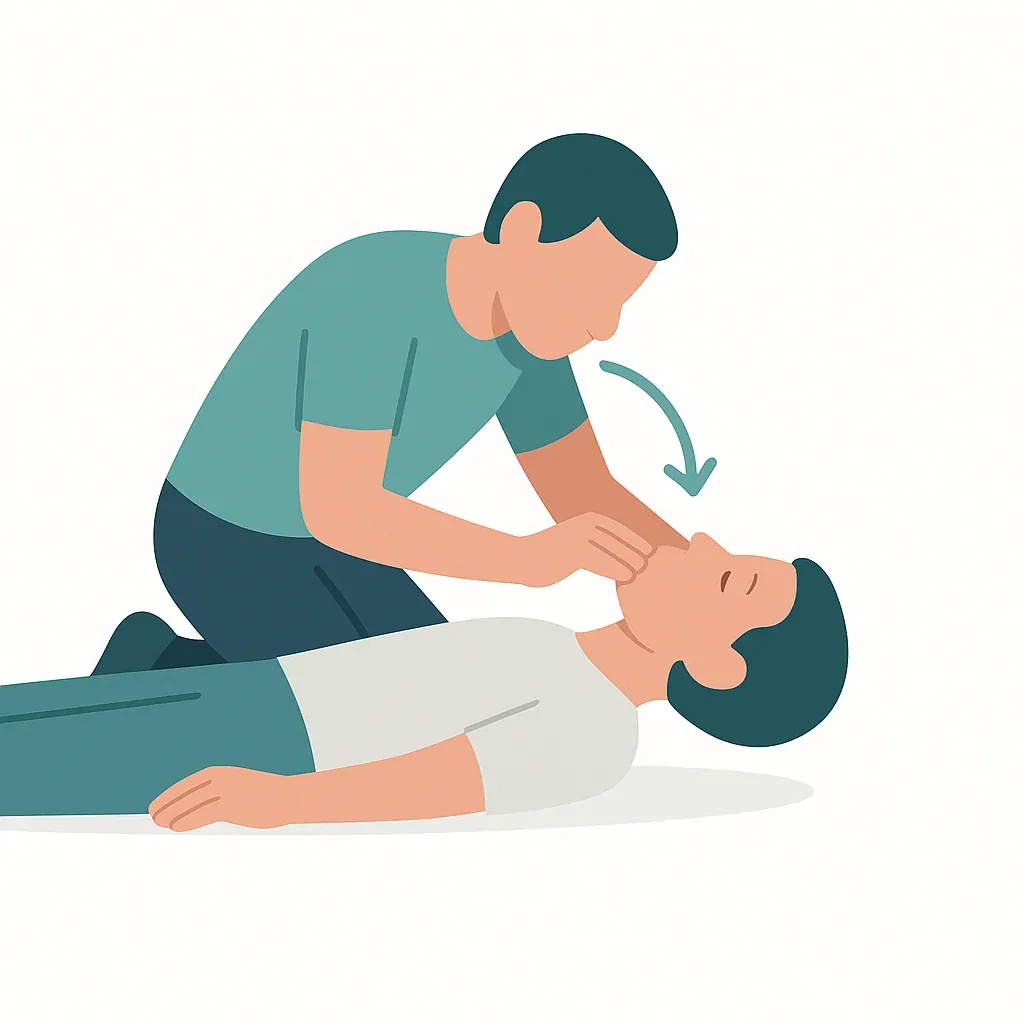

Rescue breaths means giving breaths to help move air into someone’s lungs when they are not breathing properly. In first aid, rescue breaths are usually part of CPR rather than a separate stand-alone treatment.
What are rescue breaths?
Rescue breaths are breaths given by a first aider to help air reach the lungs.
They are used to help provide oxygen when a person is:
- unresponsive
- not breathing normally
- breathing so poorly that normal breathing is not happening
Rescue breaths are one way to support breathing while emergency help is on the way.
How do rescue breaths fit with CPR?
For most adult first aid situations, rescue breaths are given as part of CPR, not instead of it.
Many first aiders are taught to give:
30chest compressions- followed by
2rescue breaths
If a person is unresponsive and not breathing normally, they need CPR. Do not delay chest compressions while trying to decide whether breaths alone are enough.
When are rescue breaths important?
Rescue breaths are especially important when the emergency has a strong breathing or oxygen problem, such as:
- drowning
- overdose
- some airway emergencies
- Respiratory Arrest
In those situations, helping air get into the lungs matters as well as keeping blood moving.
What should you do first?
- Make sure the scene is safe.
- Check for a response.
- Open the airway and check whether the person is breathing normally.
- Call
000. - If the person is unresponsive and not breathing normally, start CPR.
If you are trained and willing, include rescue breaths as part of CPR.
Are rescue breaths the same as artificial respiration?
They are closely related terms.
Artificial respiration is an older or broader term for helping someone breathe artificially.
On this site, Artificial Respiration is treated as the supporting term, while Rescue Breaths is the clearer plain-English first aid page for the practical technique.
Quick answer
Rescue breaths means giving breaths to help move air into someone’s lungs. In first aid, they are usually given as part of CPR when a person is unresponsive and not breathing normally.
Sources reviewed
- Healthdirect: first aid basics and DRSABCD
- Healthdirect: how to perform CPR
- ANZCOR Guideline 4: Airway
- ANZCOR Guideline 5: Breathing
Reviewed against Australian first aid and emergency guidance by the First Aid Glossary Editorial Team. This article is general information and does not replace emergency-operator directions, professional medical advice or hands-on first aid training.