
Cervical spine precautions are important steps to keep the neck and spine safe after an injury. The cervical spine means the bones in your neck that hold up your head and protect the spinal cord. These bones are very important because the spinal cord sends messages from the brain to the rest of the body. If the neck moves the wrong way after an injury, it can cause more damage. This is why taking cervical spine precautions is a key part of first aid.
When we talk about cervical spine precautions, we mean being very careful not to move a person’s neck or head unless it is absolutely necessary. This is especially important if someone falls, is in a car crash, or has any injury to the head or neck. Moving the neck in the wrong way can make injuries worse. Sometimes, the person might not even feel pain in their neck, but the bones or spinal cord may still be hurt. By taking cervical spine precautions, you help protect the person from more serious harm.
The cervical spine has seven small bones called vertebrae. These bones stack on top of each other to form the neck. Inside them runs the spinal cord, which is made up of nerves. The spinal cord carries messages that control movement and feeling in the body. Injuries to the cervical spine can lead to serious problems, including paralysis, if the spinal cord is damaged. This is why protecting this area after an injury is very important.
You might see cervical spine precautions used in many emergencies. If a person has hit their head hard, fallen from a height, or been in a crash, they might have a neck injury. The person may be awake or unconscious. They might say their neck hurts, or they might not feel any pain. Sometimes you can see signs like difficulty moving, or numbness and tingling in the arms or legs. The person may even have problems breathing. It’s best to assume the neck could be injured if the accident was serious, and to be very careful.
Why it matters in first aid
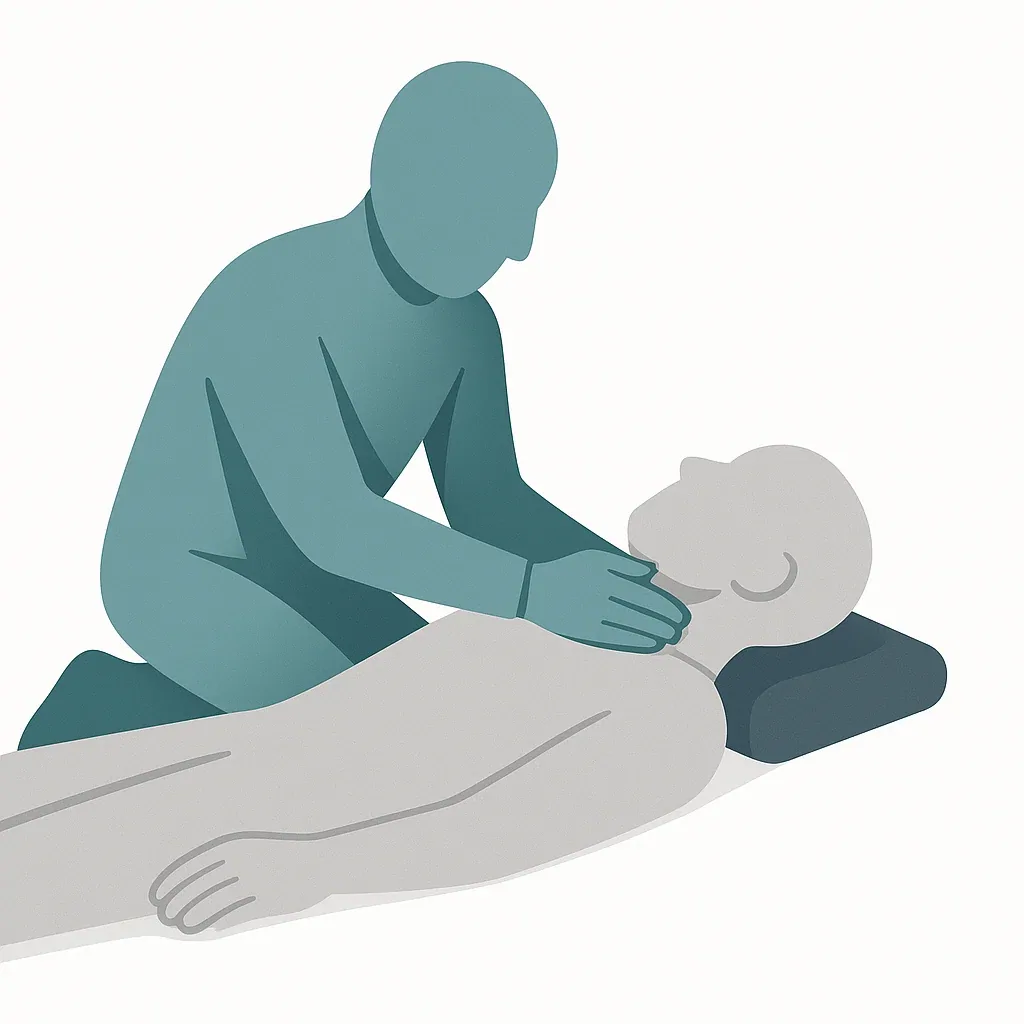
If you find yourself helping someone who has a possible neck injury, the first and most important thing is to keep the head and neck still. Do not try to move the person unless they are in immediate danger, like in a fire or where there is a risk of drowning. Moving them without help can cause more damage to the spinal cord. If you need to help move them, try to keep their head and neck in a straight line with the rest of the body. This is called “in line stabilization.”
When helping the injured person, minimise movement and keep them comfortable. Do not apply a semi-rigid neck collar: ANZCOR does not recommend these collars for first aid providers. If it is necessary to move the person from immediate danger, support the head and neck in line with the torso as gently as possible. Airway and breathing care take priority over concerns about possible spinal injury. Call for help.
When to call 000
Calling emergency services is very important if you think someone has hurt their neck. In Australia, dial 000 for urgent medical help. Tell the operator that you suspect the person has a neck or spinal injury, and explain what happened. Stay with the person until help arrives. Keep them calm and as comfortable as possible without moving them. Only move them if they are in danger where they are.
While waiting for the ambulance, keep watching the person’s breathing and response. If the person stops breathing and you need to give first aid for that, make sure you do it carefully to avoid moving the neck too much. It can be a tricky situation because you want to help but also protect the spine. If you need to give CPR, try to do it with as little neck movement as possible.
Cervical spine precautions also include using safe ways to move someone if needed. Ambulance workers and trained first aiders learn special techniques to move people with neck injuries safely. These include using hard boards or stretchers that keep the head and neck in line with the body. It is not something most everyday people need to do on their own, but it is good to understand why trained help will take these steps.
It is important to remember that cervical spine injuries are serious but not always obvious. That is why it is better to act cautiously. Never try to twist or bend someone’s neck if you think the bones or nerves inside may be hurt. By doing nothing more than keeping the person still and calling for emergency help, you can protect them from worse injury.
Safety and prevention
Also, always think about your own safety first. If the scene of the injury is dangerous, do not put yourself at risk. Call emergency services and wait for trained professionals. If the person has to be moved because of immediate danger, then do so very carefully, keeping the head and neck in line with the body. Use your hands to support the head and ask others to help if they are available.
In summary, cervical spine precautions mean being extra careful not to move someone’s neck or head if they might have hurt it. The neck holds important bones and the spinal cord, which helps us move and feel. Moving the neck the wrong way can cause serious damage. If you think someone has a neck injury, keep them still, calm, and call 000 for emergency help. Stay with the person and watch their breathing and consciousness. Your careful action can protect them until medical help arrives.
Knowing about cervical spine precautions helps everyday people understand why it’s important not to move someone after a serious accident. This helps avoid making injuries worse. Remember, when in doubt, keep the neck still and call for emergency services. It is always better to be safe and let trained professionals decide the best way to care for someone with a possible neck injury.
If you want to remember the key points: think of the neck as very delicate, keep it still, do not twist or bend it, and call 000 right away. These simple steps could save a life and prevent permanent injury. Cervical spine precautions are one of the most important ideas in first aid when dealing with accidents involving the head or neck.
If someone is awake and talking after an accident, try to keep them calm and still. Avoid letting them move their head too much. If they feel pain or numbness, be extra careful. If the person is unconscious, do not try to move them or shake them. Just keep their airway open and wait for help while keeping the neck still.
Summary
Remember, most times you will be helping by making sure the person’s neck does not move until trained help arrives. That is the safest way to care for a possible neck or spinal injury.
By understanding cervical spine precautions, you can help keep yourself, your family, and your community safer in emergencies. The neck is fragile but protecting it is simple: keep it still, be gentle, and get expert help fast.
Sources reviewed
Reviewed against current Australian injury, first aid and emergency guidance by the First Aid Glossary Editorial Team. This article is general information and does not replace emergency-operator directions, professional medical advice or hands-on first aid training.