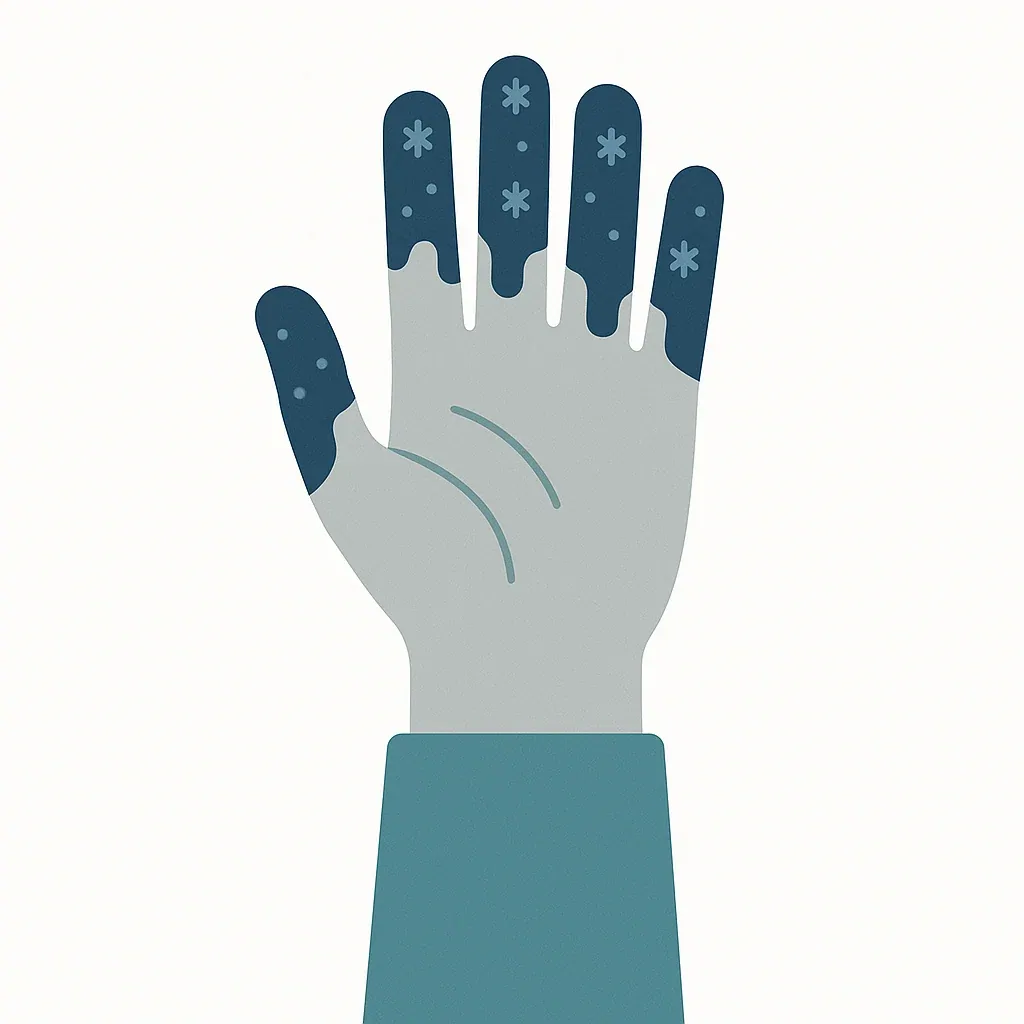

Frostbite is a type of injury that happens when the skin and the layers underneath get very cold and start to freeze. It can happen when someone is outside in freezing weather without enough warm clothing or protection. Frostbite is one of the body’s ways of reacting to extreme cold. It mainly affects parts of the body that are far from the heart, like fingers, toes, ears, and the nose. Understanding frostbite is important because it can cause damage to the skin and tissues, and sometimes this damage can be serious.
When frostbite happens, the cold causes the tiny blood vessels in the skin to close up. This means less blood can flow to the skin and the tissues underneath. Blood carries warmth and oxygen to the body, so when blood flow slows down, the skin and tissue start to freeze. At first, frostbite might make the skin feel very cold and painful. The skin can also become numb or tingly. If it gets worse, the skin can look pale or bluish, and in bad cases, it can become hard or blistered.
Why it matters in first aid
Frostbite is different from frostnip, which is a milder form of cold injury. Frostnip happens when the skin gets very cold but does not freeze. It usually goes away after warming up without causing permanent damage. Frostbite, on the other hand, can cause more serious harm and needs careful first aid.
You might notice frostbite if someone has skin that looks very pale, white, waxy, or bluish. The skin may feel hard or frozen, and the person might say they cannot feel the area. Sometimes, there may be blisters after warming up, or the skin might feel painful once the area starts to warm. The person may also feel cold, shivering, or have trouble moving fingers or toes.
In first aid, the main goal with frostbite is to stop the cold from causing more damage and to help the person warm up safely. It is important not to rub or massage the frozen skin because this can cause more injury. Instead, gently warm the area by putting it in warm (not hot) water or covering it with warm cloths. Keeping the person safe from more cold and wind is also very important. If the person is very cold or showing signs of serious frostbite, they should get medical help.
When to call 000
If frostbite is mild, warming the area gently and protecting it from getting cold again can help. However, if the person has numb skin, the skin looks hard or blistered, or if someone has frostbite on their hands, feet, face, or ears, they should see a doctor or go to a hospital. Call emergency services on 000 if the person is very sick, has difficulty breathing, is unconscious, or has frostbite with other serious injuries.
When you see frostbite, the first thing to do is to move the person to a warm, sheltered place. Take off any wet clothes and cover the person with blankets or dry clothes to keep them warm. Warm the frostbitten area slowly and carefully. Do not use a heater, fire, or hot water bottles directly on the skin because this can burn the frozen skin.
Try to make sure the person stays still and does not walk on frostbitten feet or toes, as this might cause more damage. If you need to move them, keep the frostbitten parts as still and protected as possible. Also, avoid popping any blisters, as this could lead to infection.
In some cases, frostbite can cause serious problems if left untreated. The skin or deeper tissues may die because of the frozen blood vessels. This can lead to infections or even the need for surgery in a hospital. This is why it is important to get medical help even if the frostbite seems mild or if you are unsure.
Safety and prevention
Summary
To help prevent frostbite, always wear warm, dry clothes when it is very cold outside. Cover exposed skin with hats, gloves, scarves, and socks made of warm materials. Stay dry and try not to stay out in the cold for too long, especially if the wind is strong, because wind can make frostbite happen faster. Also, keep an eye on friends and family for early signs of frostbite when you are outside in freezing weather.
In short, frostbite is a cold-weather injury that occurs when skin and underlying tissue freeze. It is important to recognise the signs early and take action to warm the person safely. Protecting people from frostbite by dressing warmly and staying out of freezing weather for too long is the best first step. If frostbite happens, gentle warming and medical care are needed to keep the person safe and help their skin heal. Call 000 if the person is in danger or shows serious problems. Understanding frostbite can help you stay safe in the cold and help others if they get hurt by the cold.
Sources reviewed
Reviewed against current Australian environmental, first aid and emergency guidance by the First Aid Glossary Editorial Team. This article is general information and does not replace emergency-operator directions, professional medical advice or hands-on first aid training.