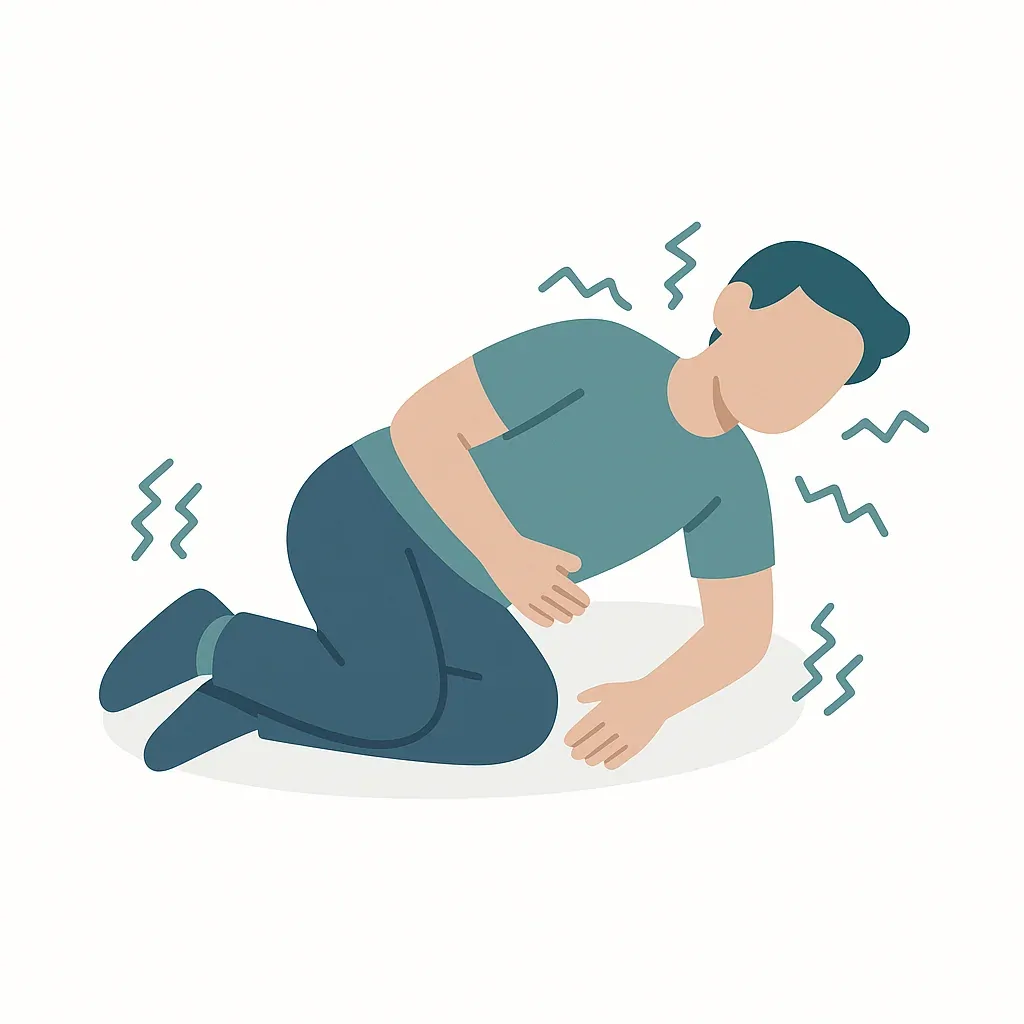

The post-ictal state is the recovery period after a seizure. During this time, a person may be confused, sleepy, upset, slow to respond, or not fully aware of what is happening around them.
What is the post-ictal state?
Post-ictal means after a seizure. It describes the period when the brain and body are settling after the seizure has stopped.
Some people recover quickly. Others may need more time before they seem back to normal.
What might you notice?
Possible signs include:
- confusion
- tiredness
- headache
- slow responses
- memory gaps
- agitation or distress
- weakness
- wanting to sleep
Is the post-ictal state dangerous?
It can be, depending on what is happening.
The main first aid concern is whether the person is breathing normally, waking as expected, and staying safe while they recover.
What should you do in first aid?
- Stay with the person.
- Check breathing and responsiveness.
- Keep them safe while they recover.
- Use the Recovery Position if needed and appropriate.
- Reassure them as they become more aware.
- Keep watching for injury, breathing problems, or another seizure.
This is also a good time for Reassessment, because the person’s condition can change during recovery.
When should you call 000?
Call 000 if:
- the person is not breathing normally
- they do not recover as expected
- another seizure happens
- they were injured
- it is their first known seizure
- you are worried for any reason
If the person becomes Unresponsive and is not breathing normally, start CPR.
How does this relate to the seizure page?
The Seizure page explains the event itself and the main first aid response. This page explains the recovery period that can follow.
Quick answer
The post-ictal state is the recovery period after a seizure. A person may be confused, sleepy, or slow to respond, so first aid focuses on breathing, safety, reassurance, and watching how well they recover.
Sources reviewed
Reviewed against current Australian neurological, first aid and emergency guidance by the First Aid Glossary Editorial Team. This article is general information and does not replace emergency-operator directions, professional medical advice or hands-on first aid training.