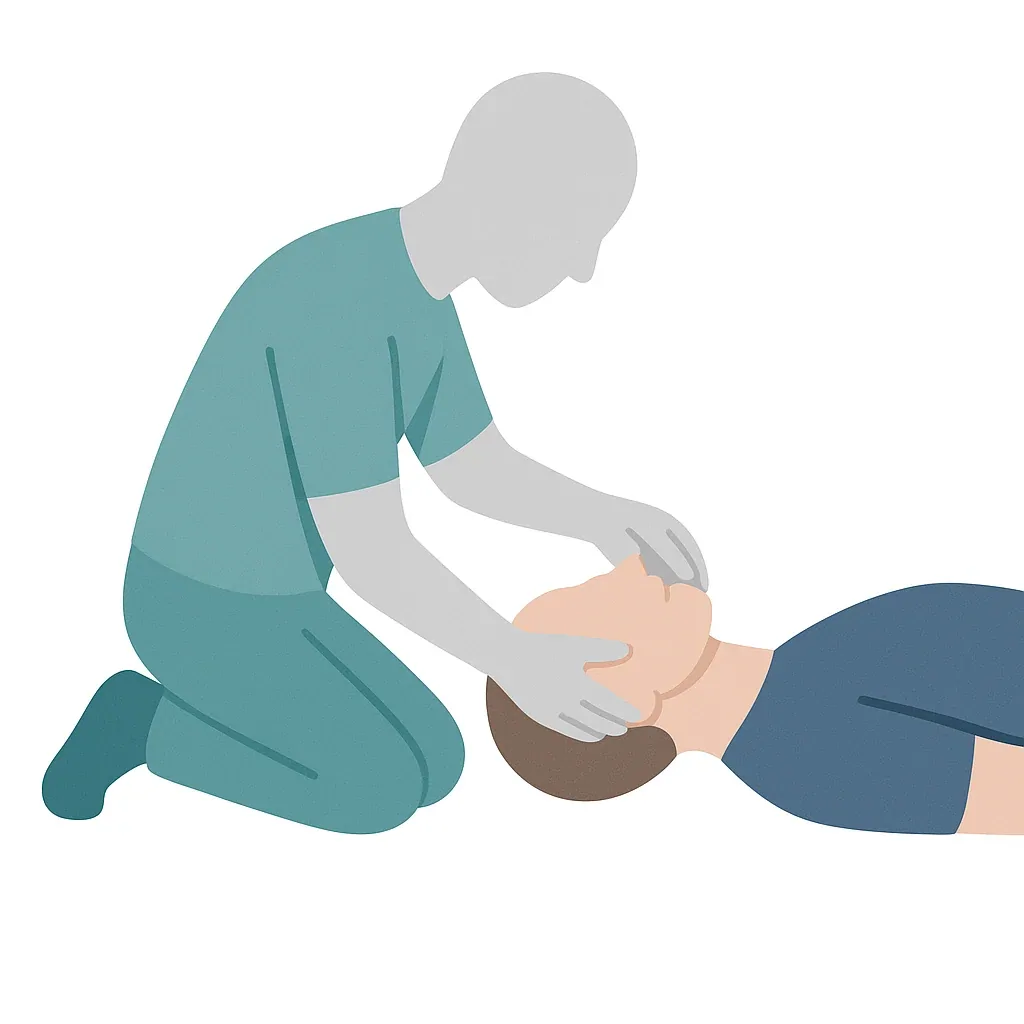

Head-tilt chin-lift is the standard first aid manoeuvre for opening the airway in an unresponsive person. It helps move the tongue and soft tissues away from the back of the throat so you can check whether breathing is normal.
What does head-tilt chin-lift mean?
Head-tilt chin-lift is the usual first airway-opening action for an unresponsive person who is on their back.
It combines two movements:
- gently tilting the head back
- lifting the chin
Together, those movements help open the airway.
When is head-tilt chin-lift used?
This manoeuvre matters when a person is:
- unresponsive
- on their back
- not breathing normally or you are not sure whether breathing is normal
- about to receive rescue breaths or CPR
It is usually part of the broader Airway Management sequence.
Why does it matter?
When someone becomes unconscious, the tongue and soft tissues can partly block the airway even when nothing is stuck in the throat.
If the airway is not open:
- breathing may be noisy, weak, or absent
- gasping may be mistaken for normal breathing
- rescue breaths may not work properly
Opening the airway first makes the breathing check more reliable.
What should a first aider do?
Use the basic first aid sequence:
- Check for danger.
- Check response.
- Call
000or send for help. - Open the airway with head-tilt chin-lift.
- Check whether breathing is normal.
If the person is unresponsive and not breathing normally, start CPR.
If the person is unresponsive but breathing normally, place them in the Recovery Position and keep monitoring them.
When might head-tilt chin-lift not be the best option?
If a neck or spine injury is suspected, a different manoeuvre such as Jaw Thrust may be safer because it aims to open the airway with less head movement.
That is the key practical difference between these two pages:
- Head-Tilt Chin-Lift is the standard airway-opening manoeuvre
- Jaw Thrust is the alternative when neck injury is a concern
Quick answer
Head-tilt chin-lift is the standard first aid manoeuvre for opening the airway in an unresponsive person. It helps you check whether breathing is normal and is commonly followed by either Recovery Position or CPR, depending on what you find.
Sources reviewed
- Healthdirect: first aid basics and DRSABCD
- Healthdirect: how to perform CPR
- ANZCOR Guideline 4: Airway
- ANZCOR Guideline 5: Breathing
Reviewed against Australian first aid and emergency guidance by the First Aid Glossary Editorial Team. This article is general information and does not replace emergency-operator directions, professional medical advice or hands-on first aid training.