
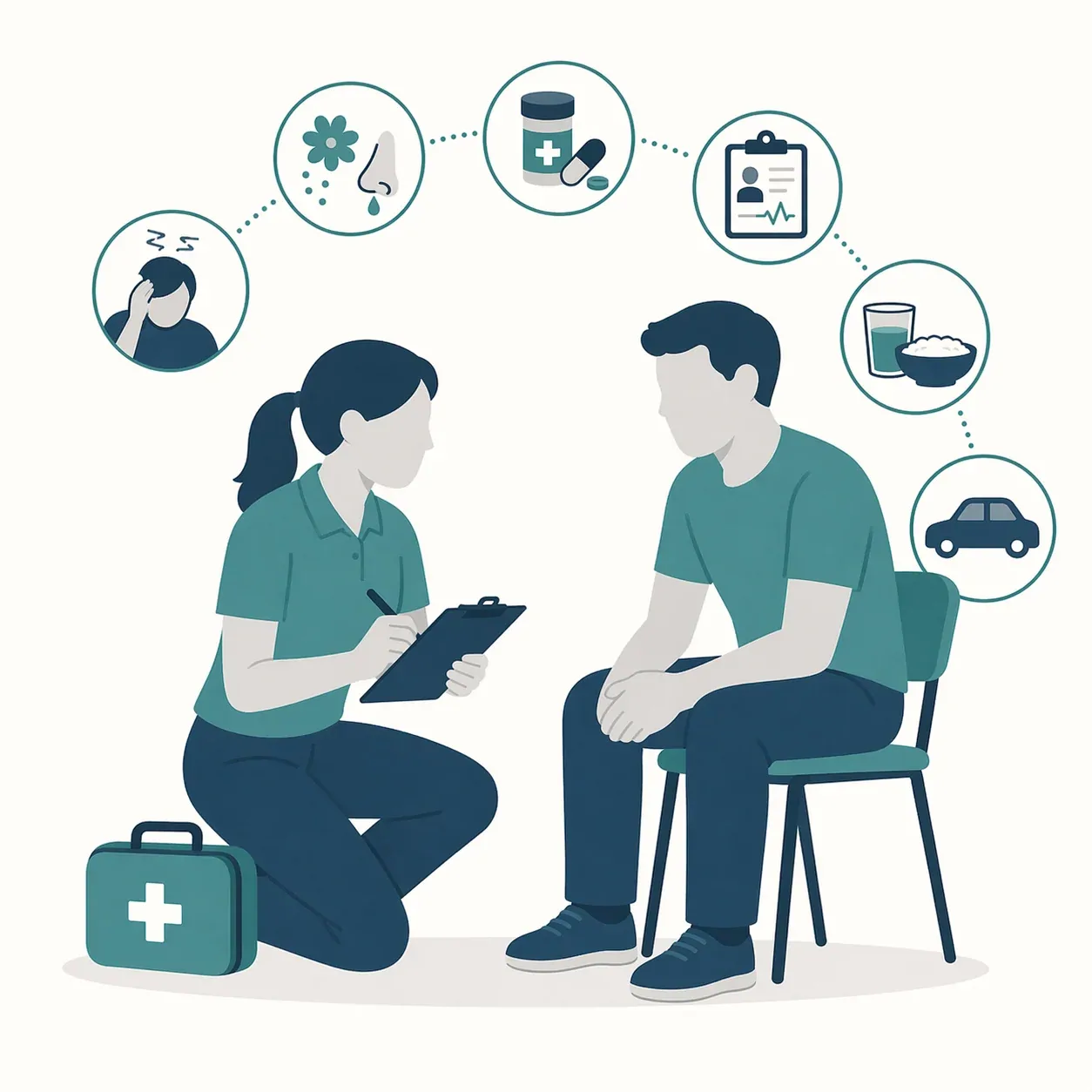

SAMPLE is a memory aid used in first aid to help gather important background information about a person. In plain English, it reminds you what to ask about after the most urgent life-threatening problems have been checked first.
What does SAMPLE stand for?
SAMPLE usually stands for:
- Signs and symptoms
- Allergies
- Medications
- Past medical history
- Last oral intake
- Events leading up to the illness or injury
It gives first aiders and responders a simple structure for asking useful questions.
Why is SAMPLE used?
When a person is awake enough to answer questions, background information can help explain what is happening.
For example, two people may both feel dizzy, but the reason may be very different. One may have diabetes, another may have taken medicine, and another may have had a head injury. SAMPLE helps you gather basic clues in an organised way.
It is often used during a Secondary Survey, after the Primary Survey has already checked for immediate life threats.
What does each part of SAMPLE mean?
Signs and symptoms
This means what the person is feeling and what you can observe.
For example, they may say they feel chest pain, dizziness, nausea, or shortness of breath. You may notice sweating, pale skin, swelling, or confusion.
Allergies
Ask whether the person has any allergies.
This may include allergies to foods, medicines, insect stings, or other triggers. This information can be especially important if the person may be having an Allergic Reaction or Anaphylaxis.
Medications
Ask what medicines the person takes.
This might include prescription medicines, over-the-counter medicines, inhalers, insulin, or an EpiPen.
Past medical history
Ask whether the person has any medical conditions or past health problems that may matter now.
For example, asthma, epilepsy, diabetes, heart problems, or previous severe allergies may help explain the situation.
Last oral intake
Ask when they last ate or drank anything.
This can sometimes be helpful in understanding the situation and may also matter once medical care takes over.
Events leading up to the illness or injury
Ask what happened before the problem started.
For example, did they fall, exercise, eat something unusual, feel unwell earlier, or suddenly collapse? This can give useful context.
Is SAMPLE only for professionals?
No. It is used by healthcare and emergency workers, but the basic idea is also helpful in first aid.
You do not need to turn it into an interview. It is simply a reminder of the most useful background questions to ask when the person is responsive and the situation allows it.
When should you use SAMPLE?
Use SAMPLE when:
- the person is awake enough to answer questions
- immediate life threats have already been checked
- you are trying to understand what may be wrong
- ambulance or medical help may need a clearer handover
If the person becomes less responsive, develops breathing problems, or the situation becomes more urgent, go back to the primary priorities first.
What if the person cannot answer?
Sometimes the person is too unwell, confused, or Unresponsive to answer.
If that happens, you may still be able to get useful information from family, friends, bystanders, medicine packets, or medical alert jewellery. But the person’s airway, breathing, circulation, and overall safety always come first.
Summary
SAMPLE is a first aid memory aid used to collect important background information about a person’s symptoms, allergies, medicines, medical history, recent intake, and the events leading up to the problem.
In plain English, it helps you ask better questions once the urgent first checks are done.
Sources reviewed
Reviewed against current Australian first aid, emergency and public-health guidance by the First Aid Glossary Editorial Team. This article is general information and does not replace emergency-operator directions, professional medical advice or hands-on first aid training.


