
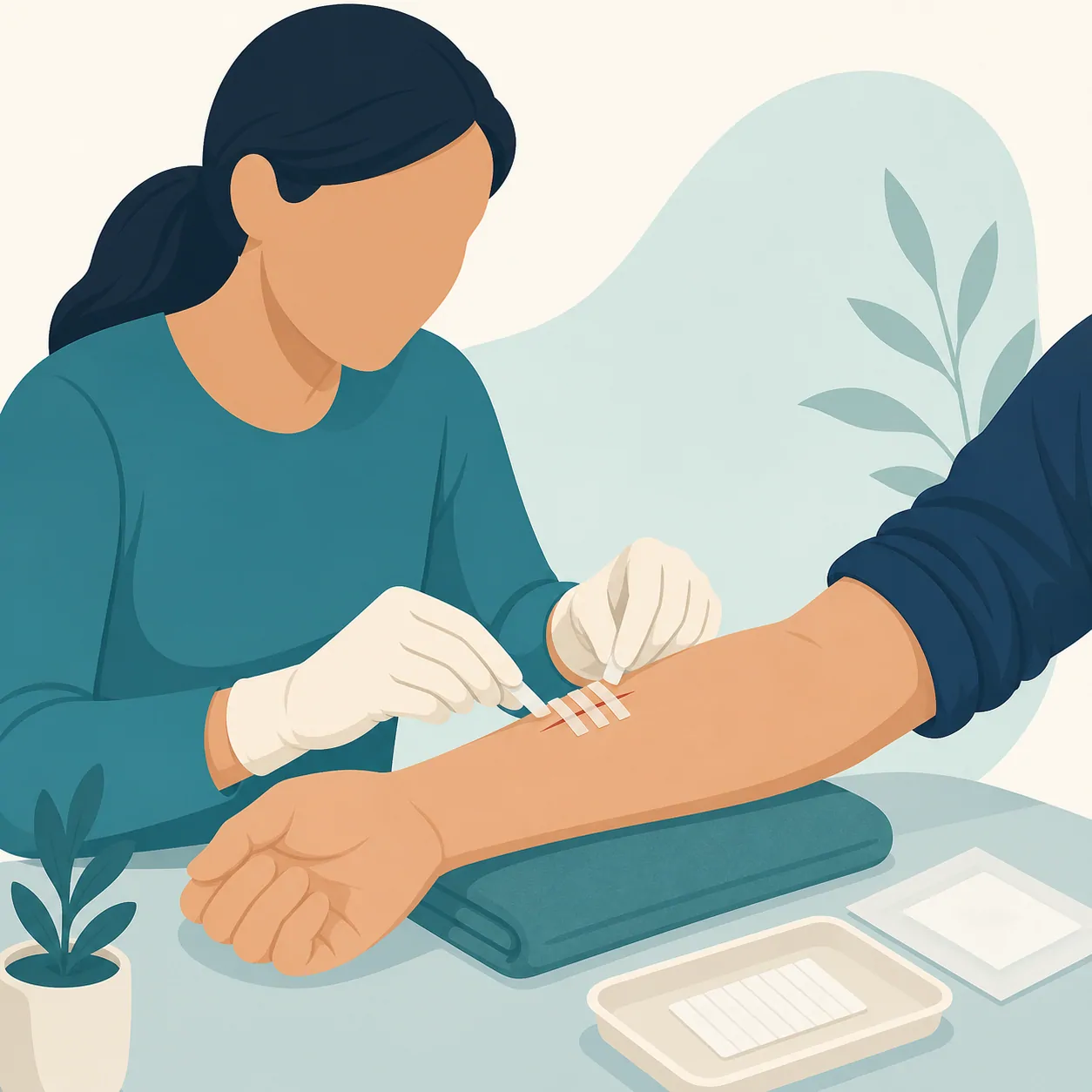

Wound closure strips definition
Wound closure strips are small adhesive strips designed to gently hold the edges of a clean, shallow cut together. They are sometimes called adhesive skin-closure strips or butterfly-style strips. In the right situation, they can support healing and reduce pulling on a minor wound. They are not a replacement for stitches, medical glue, assessment of a deep wound or emergency care.
The boundary matters. Closure strips are for a small, straight, clean cut whose edges come together easily after bleeding has stopped. They are not appropriate for a deep, gaping, contaminated, bite, puncture or heavily bleeding wound. When in doubt, cover the wound with a clean dressing and seek medical advice rather than trying to make it look closed at home.
Decide whether the cut is suitable
First make the area safe and control any bleeding with firm direct pressure. Wash hands and use gloves where appropriate. Once bleeding has stopped, look at the wound in good light without probing it. A suitable cut is generally shallow, clean, recent, not over a high-movement area and able to sit together gently without force.
Seek timely medical assessment if the cut is deep, longer than a few centimetres, gaping, contaminated, caused by a bite, puncture or dirty water, contains an embedded object, lies near the eye or on the face, crosses a joint, causes numbness or reduced movement, or will not stop bleeding. Cuts that may need stitches, glue or staples are time-sensitive, so do not delay while repeatedly trying strips.
People taking blood-thinning medicines, people with diabetes or poor circulation, people with reduced immunity and young children may need a lower threshold for professional advice. Ask about tetanus protection for dirty or deep wounds, or when vaccination status is uncertain.
Clean and dry the surrounding skin
For a minor suitable cut, rinse visible dirt away with clean running water or sterile saline after bleeding is controlled. Do not scrub the wound, dig for debris or pour harsh substances into it. Pat the skin around the cut dry with a clean pad; adhesive strips will not stick well to wet, oily or bleeding skin.
If the wound contains grit, glass, wood, metal or a foreign body that does not rinse away easily, stop. Do not use closure strips to trap contamination inside. Cover the area loosely and seek advice.
Avoid applying moisturiser, ointment or heavy antiseptic around the skin where the adhesive must stick unless product instructions or a clinician specifically advise it. These can stop the strips adhering and may cause them to lift early.
How to apply closure strips
Open the packet carefully and avoid touching the adhesive surface more than necessary. Gently bring the wound edges together with clean fingers or gloved hands, but do not force the skin. Apply the first strip across the cut at a right angle, starting from one side and smoothing it across to the other.
Place additional strips a small distance apart. Leave small gaps so the wound can be checked and fluid is not trapped. Do not run a long strip along the length of the cut instead of across it; the purpose is to bring the edges together, not simply cover the line.
The skin should look aligned, not puckered, white, numb or painful. If the wound edges will not come together without pulling, the strips keep lifting, bleeding continues, or pain increases, remove the attempt carefully and seek professional assessment. A strip should support a minor cut, not hold a wound under tension.
Secure and protect the area
You may place a light clean dressing over the strips if the site will rub or get dirty, following product instructions. Avoid wrapping tightly. Check fingers or toes beyond a bandage for normal warmth, colour and sensation. If they become cold, pale, blue, numb or tingly, loosen the bandage.
Keep the area as dry as the product instructions require. Avoid soaking, swimming, vigorous sport and movements that pull the wound open. A cut over a finger, knuckle, elbow or knee often reopens because of movement; it may need a different treatment plan from a clinician.
Do not pick at the strips or peel them off to “check underneath” several times a day. Let them come away naturally when instructed, unless they become dirty, wet, loose or a health professional tells you to remove them.
Signs the cut needs help
Seek medical advice if the wound opens, bleeds again, becomes more painful, red, hot, swollen or develops pus, fever, red streaks or a bad smell. These can indicate infection or poor healing. Seek care if the strips will not hold the edges together or the cut was not clearly minor to begin with.
Call Triple Zero (000) for severe bleeding, a major injury, faintness, breathing difficulty, collapse or a rapidly worsening condition. For an embedded object, do not remove it; apply pressure around it, stabilise the area and obtain urgent care.
An apparently small cut may have deeper damage. Reduced sensation, weakness, difficulty moving a finger or toe, a cut through a tendon area or severe pain needs prompt professional assessment.
Children and sensitive areas
For children, explain what you are doing and involve a parent, guardian or responsible adult. Closure strips can be difficult to keep on active children, especially near a joint or on damp skin. If the child cannot keep still, the wound is on the face, a bite or dirty object caused it, or you are uncertain about depth, seek medical advice.
Do not use closure strips in or near an eye, inside the mouth, on genital areas or on a burn without professional advice. These areas have special risks and may require different care.
First-aid-kit storage
Keep closure strips in their sealed packaging in a dry first-aid kit. Check expiry dates and replace packages that are torn, damp or stored in extreme heat. Include sterile dressings, saline, gloves, tape and wound-cleaning supplies alongside them.
Read the manufacturer’s directions before an incident if possible. Products vary in adhesive strength, intended uses and removal instructions. A quick familiarisation makes it easier to use them calmly later.
Common mistakes to avoid
Do not close a dirty, deep or gaping wound with strips. Do not use them over active bleeding. Do not pull skin so hard that it puckers. Do not use them to avoid seeking stitches when a wound needs assessment. Do not place strips on a wound containing a foreign object or a bite.
Do not confuse a tidy-looking wound with a safe wound. The mechanism, depth, location, contamination and function of the area matter as much as appearance.
Related glossary terms
Sources reviewed
- Healthdirect: wounds, cuts and grazes
- Healthdirect: facial injuries
- Australian Immunisation Handbook: tetanus
- Healthdirect: first aid basics
Reviewed against Australian first aid and emergency guidance by the First Aid Glossary Editorial Team. This article is general information and does not replace emergency services, professional medical advice or hands-on first aid training.


