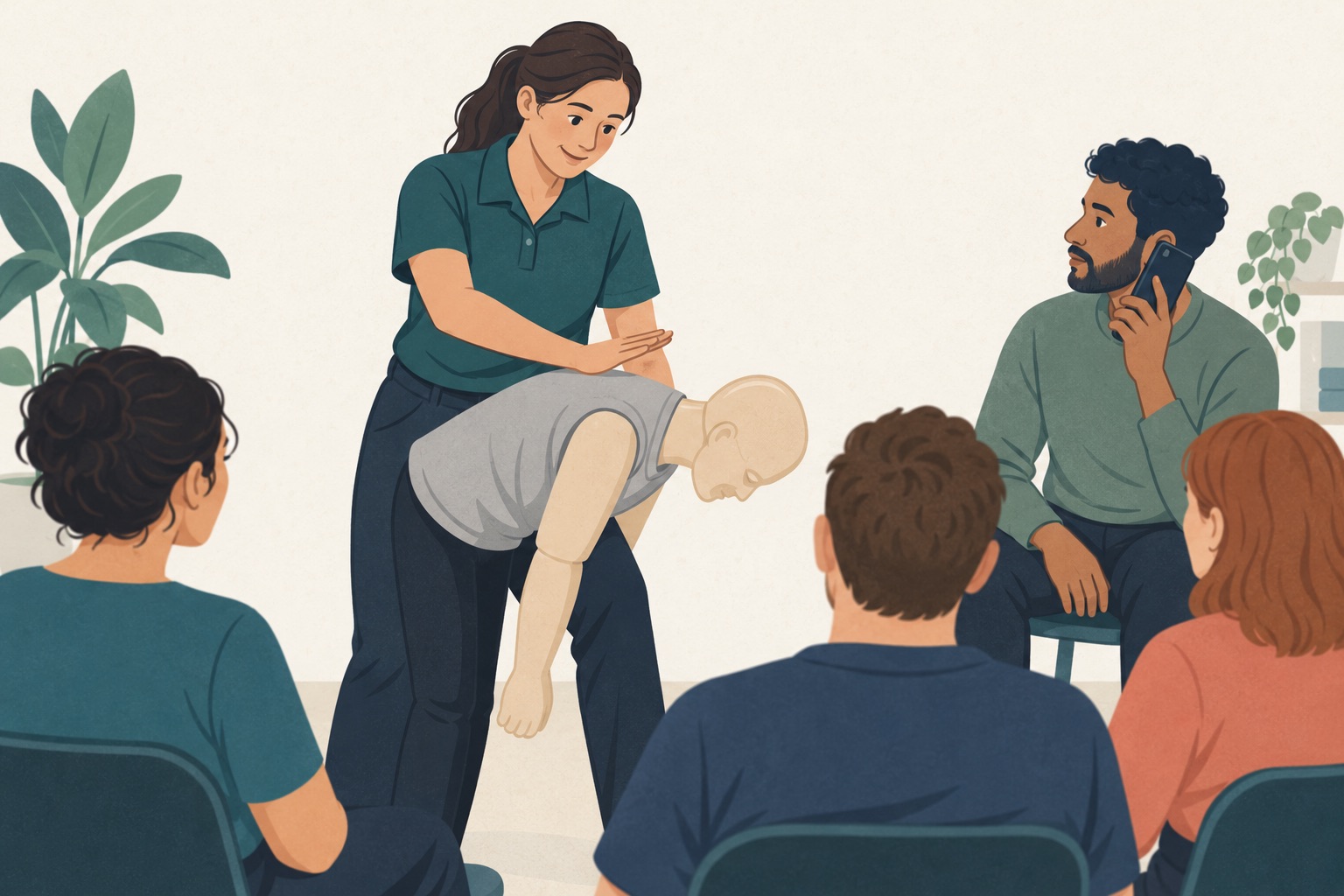
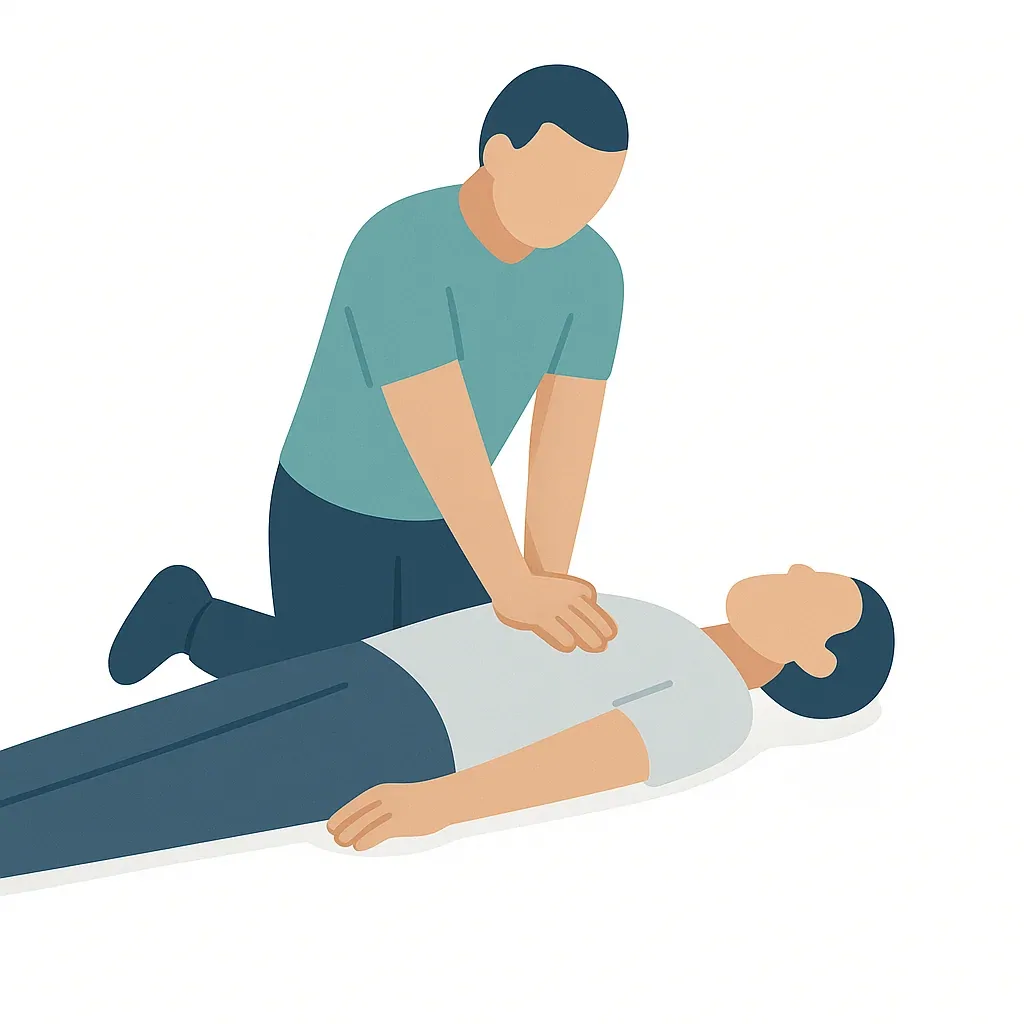

Basic life support means the first emergency actions used to help keep someone alive until professional help arrives. In first aid, it usually focuses on checking response, checking breathing, calling for help, starting CPR, and using an AED when needed.
What does basic life support mean?
Basic life support is often shortened to BLS.
It is the practical early care used when someone is:
- unresponsive
- not breathing normally
- in cardiac arrest
- in Respiratory Arrest
The aim is to keep oxygen and blood moving until advanced care takes over.
What does basic life support include?
Basic life support usually includes:
- checking for danger
- checking for a response
- calling
000 - checking airway and breathing
- starting CPR if needed
- using an AED if one is available
On this site, the step-by-step memory aid for those early actions is DRSABCD.
How is BLS different from primary survey and DRSABCD?
Primary Survey is the broader rapid first check for life-threatening problems.
DRSABCD is the simple memory aid for the order of early actions.
Basic life support is the broader emergency-care concept that includes carrying out those first actions in practice.
What should you do first?
- Make sure the scene is safe.
- Check whether the person is Unresponsive.
- Check whether they are breathing normally.
- Call
000. - Start CPR if they are unresponsive and not breathing normally.
If the person is unresponsive but breathing normally, the next practical page is Recovery Position.
Where does airway management fit?
Checking and opening the airway is part of early BLS.
The broader overview page for that step is Airway Management.
That is why these pages should connect closely:
Airway ManagementBreathingDRSABCDCPRRecovery Position
Quick answer
Basic life support means the first emergency actions used to keep someone alive until help arrives. It includes checking response and breathing, calling 000, starting CPR, using an AED if needed, and moving toward Recovery Position when the person is unresponsive but breathing normally.
How this page is checked
Publisher: First Aid Glossary Editorial Team
Last reviewed: 28 April 2026
Reviewed against: ANZCOR Guideline 8 – Cardiopulmonary Resuscitation (CPR), ANZCOR Guideline 3 – Recognition and First Aid Management of the Unconscious Person, Healthdirect Australia CPR information, and Triple Zero emergency-call guidance.
This page is educational and explains first aid language in plain English. It is not personal medical advice, diagnosis, or a replacement for accredited first aid training. In an emergency in Australia, call Triple Zero (000).